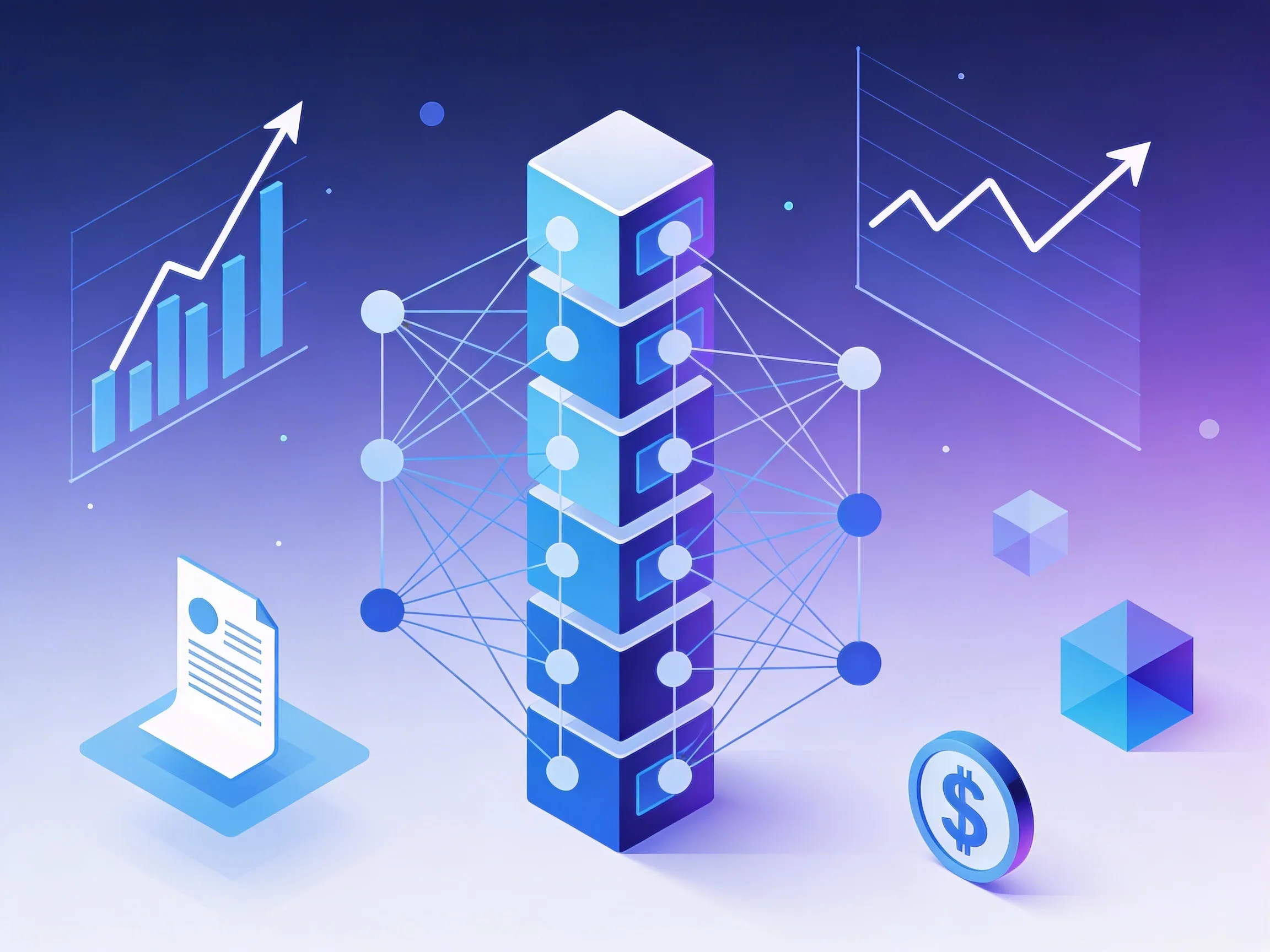
A comprehensive introduction to DeFi. The system explained
Are DeFi apps a new sensation or just a new hype? That’s probably one of the most popular discussions in crypto society this year. To find out why the DeFi ecosystem became such a huge hit, one must learn the basis it stands on.
What is DeFi?
DeFi (decentralized finance) is a new financial system that cuts out the middleman. There’s no banking system involved. It’s a transparent ecosystem based on cryptography, blockchain, and smart contracts (the main building blocks) that automatically execute all the transactions.
Early on most DeFi projects were built on Ethereum using a sturdy programming language called Solidity. It enables creating reliable smart contracts that can contain all the necessary logic for the DeFi applications. It also has the most developed ecosystem of all the platforms available in the sphere at the moment.
How it all started
One of the first projects that started the DeFi movement was MakerDAO, created in 2015.
This platform allows users to lock in collateral and generate DAI. The latter is aligned with the US dollar by using some incentives.
DAI can be used for saving on the Maker’s Oasis platform. It actually set in motion the lending/borrowing ecosystem within DeFi platforms.
In fact, DeFi is trying to create a new financial ecosystem in a permissionless way.
These are the main parts of this ecosystem:
Lending and borrowing
Stablecoin
Decentralized exchanges (DEXes)
Derivatives
Margin trading
Insurance
Oracles
Major parts of the DeFi ecosystem
Lending and borrowing
One of the major platforms in this sphere is Compound. It is an algorithmic money market protocol on Ethereum. It allows holders to supply a huge number of assets in order to earn interest.
Supplied assets can also be used as collateral for borrowing.
Stablecoin
We can create a stablecoin that is aligned with the US dollar without having to store dollars in the real world.
DAI is a good example of an algorithmic stablecoin that achieves price stability by algorithmically expanding in response to market behavior.
However, there are a lot of non-algorithmic stablecoins like USDT and USDC. Many holders are afraid to buy them as they are centralized. There is a company that stands behind such projects. It holds the equivalent value of these stablecoins.
Nevertheless, stablecoins gained a lot of popularity when it built a bridge between centralized finance and DeFi.
Decentralized exchanges (DEXes)
They are the opposite of centralized ones. Here you can change crypto assets without requiring permission.
No giving up custody or needing middlemen.
There are two main types of DEXes:
liquidity pool-based (Uniswap, Balancer, Bancor)
order book-based (Loopring, Idex)
Derivatives
Derivatives are contracts that derive the value of an asset.
The main game player in this league is Synthetix. They are a decentralized platform based on Ethereum. Synthetix creates its own on-chain synthetic assets (Synths) that track the value of real-world assets.
Margin trading
Briefly, crypto margin trading is when you borrow capital from other traders on an exchange or from the exchange itself. That’s how holders gain greater exposure to a certain asset.
Two of the major platforms in this sphere are dYdX and Fulcrum.
Insurance
This is one of the mechanisms that migrated to DeFi from centralized finance. It guarantees compensation in return for the payment of a premium.
Developers created a lot of DeFi apps (like Nexus Mutual or Opyn) helping to protect holders’ funds against smart contract failures as well as supporting the protection of deposits.
Oracles
Oracles (e.g., Chainlink) are services that allow smart contracts to receive data from outside the blockchain. Briefly, it transposes data from the real world into smart contracts on the blockchain and back again.
These are the main concepts that the DeFi system stands on. Moreover, these parts may interact with each other to create more complex DeFi money structures.
DeFi vs CeFi
What are the main differences between DeFi (decentralized finance) and CeFi (centralized finance)?
Let’s find out.
DeFi
CeFi
Permission is not required
Permission is required
Open (free collaboration)
Closed (decisions made behind closed doors)
Censorship-resistant
Can be censored
Cheap
Expensive
Built on blockchain
Built on old foundations
As you can see, DeFi is a much more open space for financial processes. However, there are some risks in the industry.
DeFi potential risks
Bugs in smart contracts and protocol changes
They can affect existing transactions and lead to capital losses. It is better to take insurance to lower the potential risks.
The project may be actually centralized
It’s no secret that the industry is full of exit scams with their bad smart contracts concentrating holders’ funds on one or two wallets. It is important to know the shutdown procedure before entering any DeFi project. Find out if someone has an admin key to shut down the protocol. Is there the on-chain governance to do so?
Systemic risk
Cascade liquidations may lead to assets losing their price in a short period of time.
Network fees
It can also be a problem; especially, if you want to supply more collateral to avoid liquidation, this can be a huge risk too.
Subtle features/changes
This set of features may incentivize users to certain non-obvious actions that can cascade across multiple protocols.
Let’s take a recent distribution of COMP tokens in the Compound protocol. It cost users to get into seem to be non-profitable high-interest borrowing that was actually profitable because they were rewarded with additional COMP tokens. Situations like that can be dangerous. They make the whole ecosystem stronger and less vulnerable to similar situations in the future.
Conclusion
DeFi is a super interesting and vibrant space that is full of opportunities. It is the thing that can actually disrupt the traditional financial industry because it is built on the new rails instead of relying on outdated technologies and procedures.
Currently, most of the financial products can only be created by banks. DeFi opens new opportunities being a young yet promising sector full of ‘permissionless’ features. You can lower the risks by learning about the main concepts and continuously keeping a finger on the whole ecosystem’s pulse. Remember that fast response is everything here.
All in all, it’s a world of high risks and high rewards.
DeFi is a new field in finance that allows participants to cut out the middleman and transact financially directly with others; it is a set of services and applications that work with the help of blockchain, cryptocurrencies, tokens and smart contracts.
1INCH is a decentralized exchange aggregator that combines large DEX exchanges into one network with liquidity and prices, providing customers with the most favorable exchange rates and conditions.

 Business