
 Business
 The price of bitcoin in May 2026 went from $82,000 to $72,000 in a couple weeks. Someone who was trying to catch the perfect moment to enter was probably wrong. And someone who bought a fixed amount each week just continued on as planned. That’s the point of the DCA strategy.

11 min.
20.05.2026
Bitcoin Cash (BCH) forecast: What to expect through 2030
For eight years now, Bitcoin Cash has remained in the top 20 cryptocurrencies by market capitalization, weathering market cycles, forks, and regulatory challenges. Yet the same question keeps coming up: How much will BCH be worth in one, three, or five years?
Below is an analysis of what’s happening with the price right now, what factors are influencing its dynamics, and what Bitcoin Cash price forecasts say for 2030. No promises, no buy or sell recommendations. Just data, figures, and scenarios currently being discussed in the industry.
What is Bitcoin Cash
In short, Bitcoin Cash is a cryptocurrency that emerged in August 2017 as a hard fork of Bitcoin. The main idea was to make the payment network faster and cheaper than Bitcoin’s by increasing the block size—first to 8 MB, then to 32 MB. For comparison, Bitcoin has a 1 MB block size plus SegWit.
It is not a clone. It is a separate blockchain with its own Proof-of-Work consensus mechanism, the same maximum supply of 21 million coins, and its own development path. Bitcoin Cash is positioned as digital cash for everyday payments. Low fees (often less than a cent), fast transactions, and support for smart contracts via CashScript and CashTokens.
In brief: The history of Bitcoin Cash and its features

The story begins with a dispute over Bitcoin’s scalability. Part of the community wanted to increase the block size, while another part advocated for SegWit and the Lightning Network. No compromise was reached. In August 2017, a hard fork occurred, and Bitcoin Cash was born.
Later, Bitcoin Cash itself underwent a split. In November 2018, Bitcoin SV split off from it under the leadership of Craig Wright. In 2020, another fork occurred—Bitcoin Cash ABC (later eCash, XEC) split off. After all these splits, the main BCH chain focused on payment scenarios and smart contracts.
Features that set BCH apart:
- 32 MB blocks vs. 1 MB for BTC
- Fees in the tenths of a cent
- Support for CashTokens
- Annual network upgrades (the latest—Layla, May 2026)
- 20 million coins in circulation out of a maximum of 21 million
Bitcoin Cash (BCH) price prediction: What to expect by 2030

Bitcoin Cash has been holding its place in the top 20 cryptocurrencies by market cap for eight years, going through cycles, forks and regulatory storms. And the same question keeps coming back: how much will BCH be worth in a year, three, five?
Below is a breakdown of what is happening with the price right now, what factors influence its dynamics, and what Bitcoin Cash price predictions say up to 2030. No promises, no recommendations to buy or sell. Only data, numbers and scenarios that are being discussed in the industry.
What is Bitcoin Cash
In short, Bitcoin Cash is a cryptocurrency that appeared in August 2017 as a Bitcoin hard fork. The main idea: to make the payment network faster and cheaper than Bitcoin’s by increasing the block size. First to 8 MB, then to 32 MB. For comparison, Bitcoin has 1 MB plus SegWit.
This is not a clone. It is a separate blockchain with its own Proof-of-Work consensus, the same maximum supply of 21 million coins, and its own development path. Bitcoin Cash positions itself as digital cash for everyday payments. Low fees (often less than a cent), fast transactions, smart contract support via CashScript and CashTokens.
Brief history of Bitcoin Cash and its features
It all started with an argument about Bitcoin scaling. One part of the community wanted bigger blocks. Another part backed SegWit and the Lightning Network. Compromise never happened. So in August 2017 the hard fork went through, and Bitcoin Cash appeared as a separate chain.
Then Bitcoin Cash itself split again. November 2018 brought Bitcoin SV under Craig Wright’s leadership. In 2020 another fork peeled off Bitcoin Cash ABC, which later rebranded to eCash (XEC). After all these divisions, the main BCH chain settled into a focus on payment scenarios and smart contracts.
Several things make BCH stand out from BTC. The block size is 32 MB instead of 1 MB, fees run in fractions of a cent, and CashTokens are natively supported. The network gets annual upgrades, with Layla being the latest one in May 2026. Out of a maximum supply of 21 million, around 20 million coins are already in circulation.
Current state of the BCH market
Year-on-year the trend looks ambiguous. Over the last 12 months BCH moved from peaks above $500 at the end of 2025 down to the $400–450 zone amid the broader crypto correction. May 2026 brought a break of $400, with a drop to $359 following, which marked the strongest negative day among large-cap altcoins at that moment.
What history tells you about Bitcoin Cash: it leans toward sideways movement on long horizons. The BCH price can hit local peaks during crypto market rallies, sure, but in the overall trend of recent years its growth amplitude has lagged behind top altcoins.
One thing worth noticing is that BCH took less part in the big altcoin rally of 2025 than its peers. Although BCH retains its place in the top 20 along with a stable miner base, the trend looks more like sideways with pullbacks rather than upward expansion.
Fundamental factors affecting the Bitcoin Cash rate

Fundamental analysis of Bitcoin Cash works on several layers. External stuff is mostly macroeconomics and Bitcoin cycles. Internal stuff covers the development of the BCH network itself and merchant adoption.
Start with the macro side and BTC cycles. Bitcoin stays the benchmark for the whole market. When BTC grows, altcoins typically follow it, and when BTC drops, altcoins drop too. Look at May 2026: Bitcoin fell below $77K, which dragged BCH down with it. No matter how much forecasting work goes in, without a bullish Bitcoin trend a sustained BCH growth is just not realistic.
Then there’s network upgrades. The Layla hard fork in May 2026 added support for loops and functions inside CashVM (the BCH smart contract engine), plus bitwise operations. That gives a base for DeFi and more complex applications on BCH. On paper it’s a potential growth driver. In practice, the effect only shows up if developers actually start building things on top.
Technical analysis of Bitcoin Cash

Indicators and moving averages
Price movements in recent days also show elevated futures activity, with volume jumping +219% above average, alongside negative funding rates. That means more shorts than longs in the market, and any positive news could trigger a short squeeze, basically a sharp upward bounce.
Bear in mind that technical analysis is always probabilistic. Signals can reverse unexpectedly, especially in the crypto market.
Bitcoin Cash forecast for 2026

Looking back at 2025, BCH spent the bigger part of the year inside the $300–550 range, with peaks around $560 in autumn and pullbacks down to $300. By the end of 2025 the BCH price closed roughly at the $440–470 level. That came in lower than some of the bullish forecasts of early year had expected (with targets in the $700–900 zone), but still higher than the 2024 bottom.
When it comes to a BCH price prediction for 2026, opinions diverge sharply. Short-term, the Bitcoin Cash price will most likely move inside the $410–520 range. If it breaks $450 with real volume, a move toward $490–520 becomes possible. On the downside, if BCH consolidates below $338, the next target opens up around $300 and lower.
Mid-term BCH rate forecasts for end of 2026 break into three buckets. The base scenario from CryptoNews and Changelly puts BCH in the $450–650 zone. Coinpedia’s optimistic case stretches it to $850–1200. A pessimistic version sees a return to $250–350.
Bitcoin Cash in 2026 will depend on how well the network digests the Layla upgrade and whether real developers actually come to BCH because of it.
Long-term Bitcoin Cash forecast (2026–2030)

Any long-term forecast is really a series of scenarios stacked together, not a single number you can pin down.
For 2027 the BCH forecast spread across different models runs from $820 on the low end up to $1600 on the high. The average estimate coming out of the major analytical resources lands somewhere near $1100. That assumes the overall crypto market keeps growing, and the next Bitcoin halving cycle (April 2028) gives the whole sector a fresh impulse.
By 2028 BCH may sit somewhere in the $1100–2100 range according to median forecasts. For 2029 the estimates spread further apart: algorithmic models point to $700–1500, while more bullish scenarios stretch the upside to $1500–2500.
The 2030 BCH price prediction is the most debated point of all. On the conservative end Changelly puts BCH at $578–842. The base case from CryptoNews and DigitalCoinPrice lifts that to $842–1342. Coinpedia’s bullish scenario reaches around $3000.
Bitcoin Cash in 2030 could trade significantly higher if the main crypto cycle is in an expansion phase by then. And it could trade significantly lower if competition pushes BCH out of the payment niche entirely.
Forecasting prices fifteen years ahead is more of a theoretical exercise than anything else. If BCH survives as an asset in 2040 and holds at least its current market rank, the range of estimates becomes enormously wide — anywhere from a few hundred dollars to tens of thousands. Any numbers for 2040 BCH should be treated for informational purposes only.
Main risks for Bitcoin Cash

Several specific risks shape the projected price movement for BCH.
The first one is competition. Lightning Network, Solana, Tron, plus newer L2 solutions are all out there. BCH still has an advantage when it comes to fees, but other networks offer pretty similar conditions and a lot more applications running on top of them.
Regulation is another piece. Cryptocurrencies sit under the regulators’ radar in the US, EU and UK. Rule changes can sharply hit both liquidity and access in any of these markets.
Then there’s the liquidity question relative to BTC. Bitcoin Cash trades on smaller volumes than Bitcoin, which amplifies how big price movements get in either direction, both up and down.
Correlation with BTC matters too. BCH mostly follows wherever Bitcoin goes. If BTC enters an extended bear trend, BCH growth will be extremely limited regardless of what happens with its own fundamentals.
And finally, smart contract adoption. If Layla and the upgrades that follow don’t lead to real dApps on BCH, the utility investment case starts to weaken. BCH will depend on whether technological improvements actually turn into real-world usage by users and developers.
Is it worth investing in Bitcoin Cash in 2026

The question is individual, the answer depends on the investor’s risk profile, investment horizon, and BCH share in the portfolio. A few facts worth keeping in mind.
BCH is in its eighth year holding a position in the crypto market top. This is not a guarantee of future results, but a signal of basic durability. Merchant adoption is real, not marketing. From the long-term investor’s position such fundamental characteristics matter.
On the other hand, BCH growth prospects in the last several years have lagged behind the broader crypto market. Cycle after cycle BCH has not returned to the 2017 highs. Although BCH retains its fundamentals, the upper levels remain unreachable, and for a new investor this is a serious argument.
The investment case for BCH is built on two theses. Either payments truly go mass and BCH wins from its niche. Or the smart contract ecosystem after Layla brings network usage growth and developer inflow. If neither works, the asset may remain in the current range for years.
Many investors hold BCH as one of the large-cap altcoin positions, diversifying outside of Bitcoin and Ethereum. How much weight to allocate — everyone decides on their own.
This article is created for informational purposes only and is not a recommendation to buy or sell any cryptocurrencies. Any numbers in forecasts can be considered only as scenario estimates. This is analytical material, not financial advice.
Why forecasts should be perceived as probabilistic

Any price forecast is a scenario built on historical data and current conditions. Cryptocurrencies are especially difficult for forecasting the price of Bitcoin and any other coins. Too many variables: monetary policy, regulation, technological shifts, behavior of large holders, unexpected events like an exchange hack or an ETF approval.
Although BCH has a relatively stable base, the 2030 forecast is essentially a range of probabilities, not a precise number. When an analyst writes “projected Bitcoin Cash price $1000”, this means “in one of the scenarios”.
A trend can be tracked, but not predicted with confidence. Support and resistance levels are statistical zones, not magic. Any long-term BCH price forecast is a working tool for planning, not a road map.
Frequently asked questions
How much can BCH cost by the end of 2026
By the end of 2026 the BCH price actually closed near $440–470. At the moment the asset is in the range of $359–410, and 2026 dynamics so far do not confirm a quick return to 2025 levels.
Will BCH be able to reach $1000 in 2026
Whether BCH can break $1000 — depends on a number of conditions: a bullish Bitcoin trend, the success of the Layla upgrade, the general attitude toward altcoins. A Bitcoin Cash price forecast of $1000 for the end of 2026 appears in optimistic models, but does not dominate in average estimates.
What will BCH growth depend on in the long-term perspective
First of all on the Bitcoin cycle and on how well Bitcoin Cash can take a real niche — payments, micro-transactions, or smart contracts. Without a sustained utility, BCH growth is limited by the general movements of the cryptocurrency market. BCH growth will also depend on the regulatory background and competitive pressure from other payment networks.
How does the BCH chart differ from the BTC chart
Bitcoin Cash correlates with Bitcoin but with higher volatility. On pullbacks BCH often falls harder, on rallies — can rise faster, but not always. Daily opening and closing prices show that BCH is more sensitive to the altcoin segment’s sentiment.
What are the prospects for BCH by 2040
Forecasting prices on a 15-year horizon has extremely low accuracy. In 2040 BCH may trade in the very wide range, and any numbers should be considered as scenario-based. The BCH outlook depends on whether the project keeps its place in the top 20, how payment networks develop and what share the crypto market will take in the financial system.
Where to track the current BCH price and chart
The current BCH chart and the current BCH value can be checked on CoinGecko, CoinMarketCap, TradingView. Data updates in real time based on aggregated quotes from hundreds of exchanges.
Coin24 does not engage in securities trading. If you need to exchange BCH for cash or a non-cash transfer — this is Coin24’s profile.
Start your crypto exchange with Coin24


Exchange BTC, ETH, USDT and more — cash or card
Secure and fast crypto exchange since 2018
Buy or sell
100+
cryptocurrencies quickly and easily
Exchange crypto with cash or
card with Coin24
Exchange crypto
online
or in person in 50+ cities
Buy or sell cryptocurrency
via Privat24
Similar Articles

28.08.2025
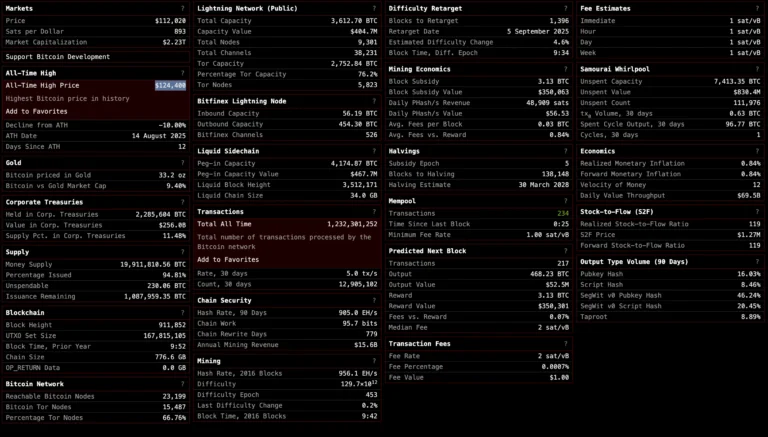
According to Clark Moody Bitcoin, the Bitcoin blockchain recently processed its 1,232,298,045^(th) transaction. Despite the scepticism of many financial experts, the first cryptocurrency has not only survived, but also strengthened its position, reaching a new all-time high (ATH) of $124,400.

05.03.2025
Mining digital currency has long been one of the most trending ways of earning money in the blockchain sphere. Every year, mining cryptocurrency becomes more and more complicated, because this process requires a huge amount of electricity, expensive hardware and decreasing every 5 years the reward paid to participants for protecting the network, if we are talking about bitcoin.