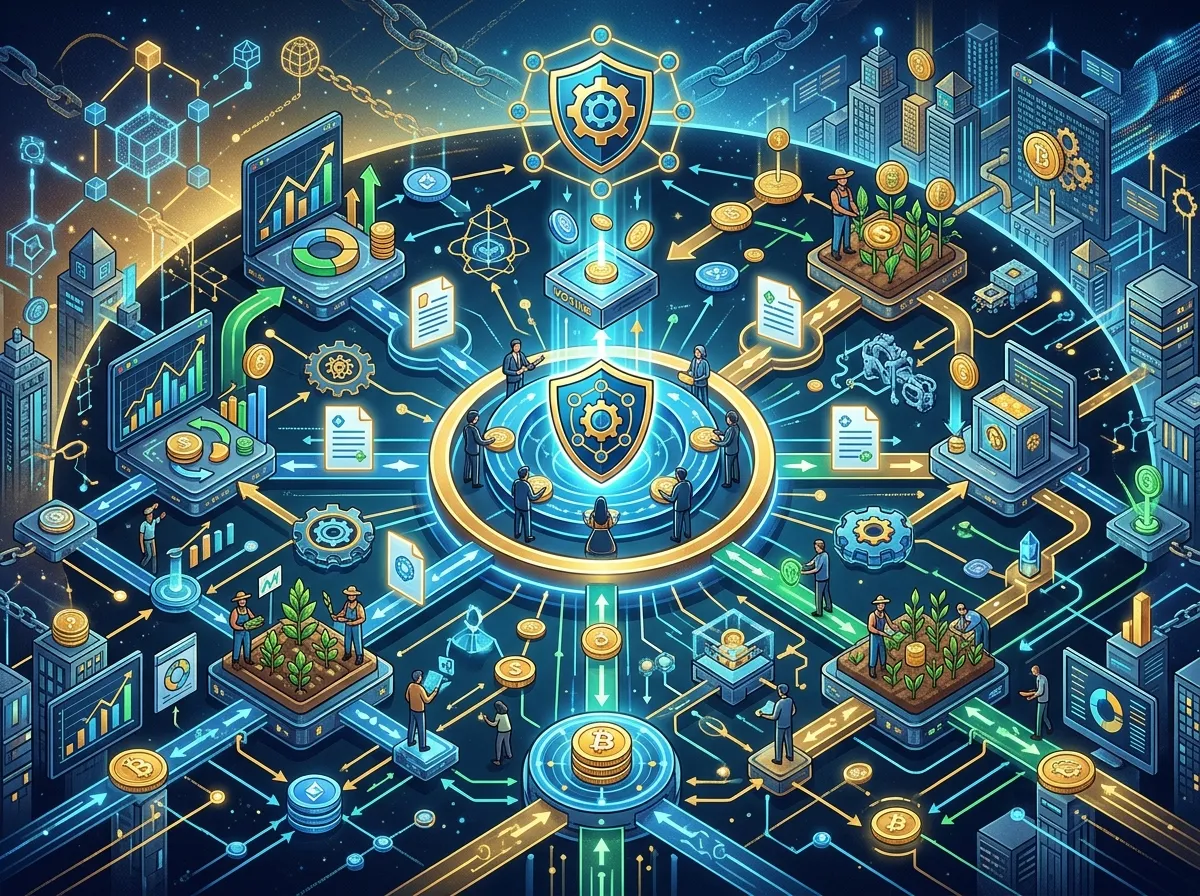
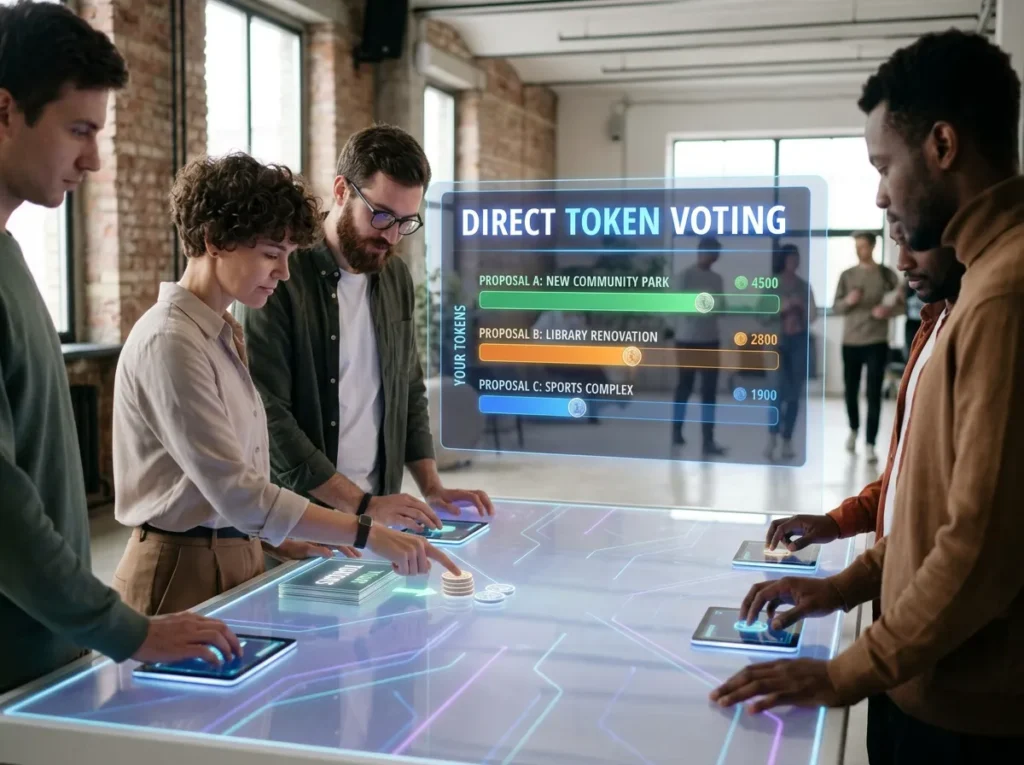
Over the past five years, new DAO experiments and models have flourished, garnering attention for their voting processes. If Web3 is to become a user-owned internet, DAOs will be the organisational fundamental through which that ownership is distributed. With over 13,000 active DAOs globally in 2026, up from just a few hundred in 2021, the space has matured considerably.
Key DAO governance areas
DAOs are governed on both an internal and external level. Non-hierarchical organisational structures and quasi-democratic characteristics define internal governance. External governance refers to the network’s and decision-dependence making are on clusters of servers and individual nodes. Notably, individuals who control nodes and server capacity may have disproportionate influence over decision-making, and more so than other players.
The critical blockchain-based governance tools are as follows:
Tokenisation is the process of converting the rights to conduct an action on an asset into a blockchain-based transferable data element called a token.
Self-enforcement and rule formalisation: the process of incorporating organisational practices into smart contracts.
Autonomous automatisation: building sophisticated smart contracts like DAOs that let numerous parties communicate without human intervention.
Decentralisation of authority over infrastructure: the community’s ownership and control of technology tools through decentralisation of the infrastructure they depend on, such as collaboration platforms (and their servers) for coordination.
Transparency enhancement: the practice of exposing organisational processes and related data via the use of blockchain technology’ permanence and immutability qualities.
Codification of trust: codifying a specific level of trust into systems that enable agents to enter into agreements without involving a third party.
This voting mechanism requires achieving a predetermined threshold before the vote may be carried. Typically, the barrier is specified as a percentage of the total quantity of tokens. However, other projects specify numerical thresholds explicitly. The benefit of this voting system is that it is straightforward and has been extensively tested in practice throughout time. The drawback is equally self-evident: determining the threshold is challenging. If the threshold is placed too high, the vote will be difficult to pass; if it is set too low, huge currency holders may easily influence the voting results, resulting in whale attacks.
Individual Votes This form of voting is more prevalent in conventional elections. This implies that each member, regardless of the number of tokens they own, is equivalent to “one person, one vote.” This voting technique has the virtue of simplicity, but the risk of being susceptible to witchcraft assaults. Currently, this method is used to demonstrate human DAO.
Voting by representative
Representative voting entails voters delegating their authority to a specific representative and allowing the representative to vote for himself. The general election in the United States is a kind of representative voting. The DPoS consensus algorithm is a standard representative voting method on the blockchain, and the EOS (now Vaulta) chain uses this voting mechanism.
Stream democratic voting
A form of representative voting is streaming democratic voting. This implies that members may assign their voting rights to those in whom they have placed their faith. Unlike the representative system, streaming democratic voting uses a different voting mechanism. This voting approach provides voters with a greater degree of flexibility and can boost voter engagement.
Voting by relative majority with limited power
By and large, relative majority voting is incompatible with DAO adoption, since this voting style is very sensitive to assault. The Moloch DAO circumvents this weakness by limiting voter registration. To be eligible to vote on a proposal, members must sponsor it. This voting technique is currently being employed in MetaCartel Ventures, Raid Guild, and DAOhaus.
Off-chain voting
This voting approach eliminates the need for costly chain computations and instead sends the results immediately. This approach benefits from being efficient and inexpensive, but it has the downside of increasing danger. In severe circumstances, multi-signature members cannot be stopped from engaging in non-community-approved behaviour.
Optimistic governance
Optimistic governance is a step forward over the previous method. Optimistic governance makes use of a DAO rather than several signatures. Any DAO member may commit a specific token in exchange for uploading vote results. If someone objects to the outcome, they may launch a challenge via a dispute resolution mechanism; those who fail will forfeit their promised tokens. This strategy improves security, but adds complexity.
Futarchy mechanism
Its objective is to address the flaws of conventional democracy by determining policy execution via prediction markets. Individuals no longer vote on whether to execute a specific policy, but rather on metrics that decide how their nation (organisation or corporation) will work, and then forecast the market to find the ideal metric policy. If the policy is successful, a fee is paid depending on the number of assets owned by each member in the “acceptance market,” and the operation is similar when the policy is rejected. This approach can be used to acquire knowledge and completely deploy collective wisdom via economic incentives, but its operation is too sophisticated to be generally adopted.
Quadratic voting
Quadratic voting is a decision-making procedure in which participants distribute votes to represent their preferences’ degree rather than merely their direction. In essence, voters might choose to pay for more votes on a proposal to firmly convey their opinion. Voters are allocated a total voting budget and then have complete discretion overspending their votes. The most efficient usage is to distribute votes over numerous topics; however, if a voter is really enthusiastic about a particular issue, they might choose to purchase more votes for that result, establishing a form of preference economy.
The problem with voting in DAOs – decentralisation issues
Currently, we are witnessing an iceberg that is referred to as decentralised. However, it is simply the tip of the iceberg; the remaining 90 % of operations are entirely centralised. Users and participants need to be aware that in locations like the United States and the United Kingdom, regulatory organisations might concentrate on this kind of partial decentralisation. Notably, states such as Wyoming and Alabama have passed the DUNA Act, granting DAOs legal status as unincorporated nonprofit associations with limited liability for members, signalling a shift toward regulatory clarity.
Despite its promise as a new and disruptive organisational structure, DAOs continue to encounter challenges regarding their security and legality. The $292 million Kelp DAO exploit in April 2026, the largest DeFi hack that year, has once again underscored the vulnerability of cross-chain DAO infrastructure. Another issue that concerns new investors is a lack of awareness of the technical expertise necessary to maintain and safeguard the underlying infrastructure and consensus process.
Furthermore, code employed in a DAO may be used to replace some components of legal contracts, resulting in significant operational cost savings. However, legal protection cannot be guaranteed outside the DAO’s regulations. Issues may develop if the DAO’s control is centralised or the definition of the DAO is ambiguous.
Difficulties may arise with coordination and rapid movement. Decision-making in a DAO may be contingent on the members’ responsiveness. This is in contrast to centralised businesses, where CEOs may make swift choices and assist in propelling the business ahead. However, DAOs may use a technique called ‘progressive decentralisation,’ in which a centralised group makes initial choices and then the DAO decentralises over time. 4. Building a viable DAO voting model.
DAO is governed democratically by community members. While there are several manifestations, they all have a common goal: to achieve trustless joint management via blockchain technology. The voting process serves as the vehicle for accomplishing this purpose.
Currently, the voting system is through four distinct phases of development. One is specialisation, which encompasses both usage and research & development. The specialisation in research and development is most evident in certain projects’ in-depth exploration of particular mechanisms, such as GnosisDAO’s creation of a series of related tools for the Futarchy mechanism and Vocdoni’s digital voting platform.
The second is intricacy. As the newly formed mechanism incorporates various aspects and dangers, the mechanism’s design becomes more complex. For example, Belief Voting and Futarchy processes are far more difficult than previous voting mechanisms, both in terms of construction and application.
The third is a hybrid of on-chain and off-chain transactions. Due to the high cost of on-chain operations, certain techniques have evolved to combine off-chain voting with on-chain execution, such as the system for merging Snapshot and multi-signature wallets, and optimistic voting mechanisms used in various governance frameworks.
The fourth is to commence valuing and influencing voting. As previously stated, the newly developing procedures are attempting to resolve the vote value and voting impact issues. Quadratic voting achieves a balance between voting value and voting influence by raising the price of subsequent votes in a quadratic curve; belief voting achieves this alignment through the dynamic growth of voting influence over time; and Futarchy achieves this balance through the prediction market. 5. Best DAO voting models. Examples
A plethora of DAO voting models arise, such as:
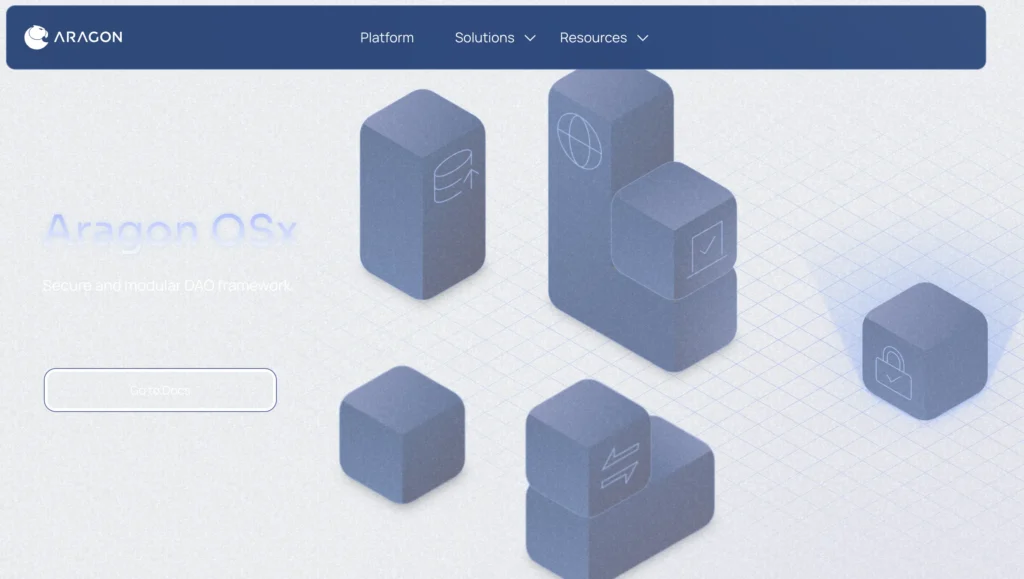
Aragon OSx: An open-source blockchain framework that enables users to administer and create decentralised autonomous organisations. Aragon utilises Ethereum smart contracts to create, manage, and distribute the organisation’s earnings. Voting, payroll, bookkeeping, and assignment management are all supported by the project. It powers DAOs that are fundamental to Ethereum, such as Lido and Curve, helping these projects govern more than $16bn in assets.
Moloch DAO: A framework for decentralised autonomous organisations that offers funding to advance the Ethereum ecosystem. Its rage-quit mechanism protects minority holders. The Moloch v3 framework is actively used through DAOhaus, a no-code platform for launching Moloch-based DAOs.
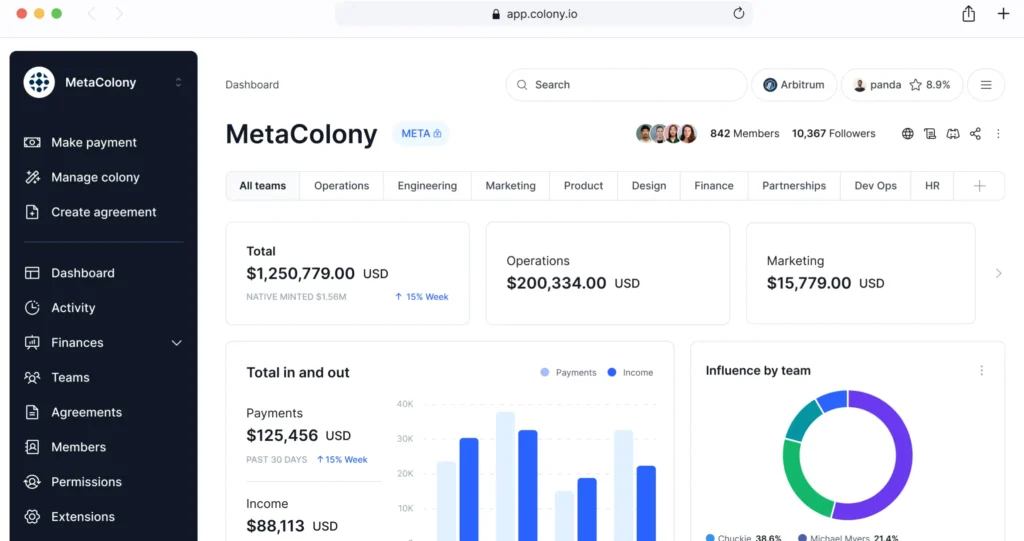
Colony: A smart contract system that provides a foundation for organisational ownership and financial administration. Utilising the provided smart contract modules, users may design multiple DAOs. Colony operates on Ethereum with multichain interoperability via Arbitrum.
DAOhaus: A no-code platform built on the Moloch v3 framework, designed for small, tight-knit groups. It connects directly to Gnosis Safe for treasury management and uses lightweight permission modules called “shamans” for flexible role assignment.
Syndicate: A decentralised social network and investment platform that revolutionises the way the world generates wealth. The protocol democratises investment by enabling communities to generate and deploy funds on their own terms, while also providing infrastructure for appchains and on-chain organisations.
Conclusion
DAOs provide an unparalleled exploration of the voting mechanism design field. They are a novel occurrence, and their long-term existence will be determined by the dynamics they are based on. Their fast speed of invention and relative ease of creation results in a rapid series of tests, which aids us in determining the optimal way to coordinate on humanity’s most difficult tasks.
Two rates of 10% per year can yield different returns, and the difference can sometimes become hundreds of dollars per position. It all comes down to the three letters before the percentage. APR and APY are being used at every turn in the cryptocurrency space: exchanges advertise APY rates on DeFi platforms, lending services display APR on loans, and the numbers next to these abbreviations look similar, even though they mean different things.
It’s important for investors to understand the difference between APR and APY, if only because platform marketers understand it perfectly well and always highlight whichever metric looks more attractive. So let’s break down what APR and APY are, provide the formulas, calculate examples using real numbers, and show where each metric is appropriate.
Open the chart for any cryptocurrency on an exchange or in TradingView, and you’ll almost certainly see the MACD among the built-in tools. It’s one of the most recognizable elements of technical analysis: it’s used by both beginners who are just getting started with crypto trading and professional fund managers. The reason is simple. The […]
BONK experienced a hard fall in May 2026. The current price is around $0.000004594, about 92% below the ATH (all-time high) of $0.00005898 set on November 20, 2024. The token still attracts a lot of attention, mostly because it is at the center of Solana’s meme economy. So, which BONK price forecast is grounded enough […]

 Business