
 Business
 What exactly is the metaverse? It represents the next stage in the internet's evolution, surpassing the traditional notion of an "information superhighway." To step into this immersive digital domain, you'll utilize virtual reality instead of the usual keyboard and screen interfaces. Virtual headsets, smart glasses, and motion tracking systems provide complete immersion within the metaverse, enabling interactions with people and objects while facilitating digital transactions.
12 min.
30.01.2026
How to make money with NFTs: 7 proven methods for beginners
NFTs are no longer just “pictures worth millions.” Today, they represent a digital asset market where individuals earn income in various ways: some resell tokens on marketplaces, some create collections, and some generate revenue from games, rentals, or staking. Yes, you can make a profit on NFTs. But it’s not a “make money” button: it’s a mixture of market, taste, discipline, and basic security.
Below are seven ways to start making money with NFTs in 2026, explained in simple terms, with real examples of income, platforms, and a list of risks that most often “eat away” at beginners’ profits.
What is an NFT and why is it a cool way to make money?
NFT is a unique, non-interchangeable digital token on the blockchain. It confirms ownership of a specific digital object: art, game item, card, music, community access, event ticket, “key” to bonuses, etc. A virtual NFT is a record in a blockchain (for example, Ethereum), which means that its transaction history can be verified: who owned the token, when it was bought/sold, and at what price.
Why investors earn money on NFTs:
- Rarity and demand: popular collections have a limited number of unique tokens.
- Speculation: people buy in order to sell at a higher price (as with any asset).
- Utility: NFTs can provide access to games, content, whitelists, events.
- Community: strong communities drive demand and retain attention.
- Brands and fashion: collaborations, merchandise, “digital rights,” and status.
Important: the NFT market is cyclical. During periods of hype, profits seem easy. During periods of cooling, those who know how to choose projects, calculate risks, and understand how NFTs work come out on top.
7 ways to make money with NFTs
1) Buying and selling NFTs on marketplaces
This is the most straightforward way: buy NFTs cheaply and sell them at a higher price. In practice, this can be:
- quick flip (bought on mint/white list → sold in the first hours/days)
- medium term (hold for several weeks/months while the project grows)
- trading at the floor price and rare attributes
- arbitrage between platforms (less suitable for beginners)
What a beginner needs:
- A crypto wallet. Most often MetaMask (for Ethereum and L2 blockchain) or another compatible wallet.
- Cryptocurrency for purchases and commissions: ETH (if Ethereum), sometimes other networks.
- Selected digital art marketplaces: OpenSea, Blur, Rarible, Binance NFT, etc.
- Understanding commissions: the platform may charge a service percentage, and the network charges gas.
About commissions in simple terms:
- Gas fee — a network commission (e.g., Ethereum) for a transaction; it does not depend on the marketplace, and OpenSea explicitly states that it does not control gas and does not receive these commissions — they go to the network validators/miners.
- Marketplace service commission — the platform’s percentage for a transaction.
- For example, OpenSea states in its rules that it typically charges 1% for the sale of NFTs (and describes other types of fees separately).
- Royalties to the creator — an additional part that may apply depending on the rules of the collection/platform (the policy has changed on different marketplaces).
How to choose NFTs for resale (without magic):
- Look at the activity on the marketplace: the number of transactions, trading volume, how many unique holders
- Look at the dynamics of the “floor”: is the floor price rising or falling
- Look at liquidity: is it possible to sell now, rather than “someday”
- Read about what investing in the project offers: utility, gameplay, access, partnerships
- Check the originality of the collection on platforms: many beginners buy fakes.
A mini life hack for beginners investing in NFTs: instead of hunting for the “next CryptoPunks,” start with a small budget and the goal of “not making a lot, but not losing.” The NFT market teaches you to invest quickly and expensively.
2) Creating your own collection (the process of creating NFTs)
If you are an artist, designer, photographer, musician, or simply know how to make a product, you can create non-fungible tokens and sell them. This is not just “art.” Current trends include:
- characters/series with a strong concept
- collections based on storytelling
- passes/passports (membership NFTs) with access to bonuses
- game items, if integrated into the game
- NFTs that provide utility: discounts, early access, merchandise
The algorithm for creating an NFT is very simple:
- Concept: what are you selling — an image, access, status, function?
- Format: 1/1 (unique works) or collection (1000–10000 tokens).
- Platform: OpenSea, Rarible, and others.
- Mint: “issuing” a token on the blockchain. Sometimes lazy minting is used — when the token is actually minted at the moment of purchase (to reduce the creator’s costs).
- Marketing: without an audience, “just putting it out there” usually doesn’t work.
The main mistake beginners make is thinking that your NFT sells itself. In reality, it is the meaning, style, and community that sell. Therefore, creating an NFT is only the beginning of the journey. Even a “digital object” without a history is just a file.
3) Participation in NFT games (Play-to-Earn)
Play-to-Earn (P2E) are blockchain games where you can earn income:
- tokens to your wallet for playing games for activity/wins
- NFT items that can be sold
- rare in-game assets that are in demand (land, pets, equipment)
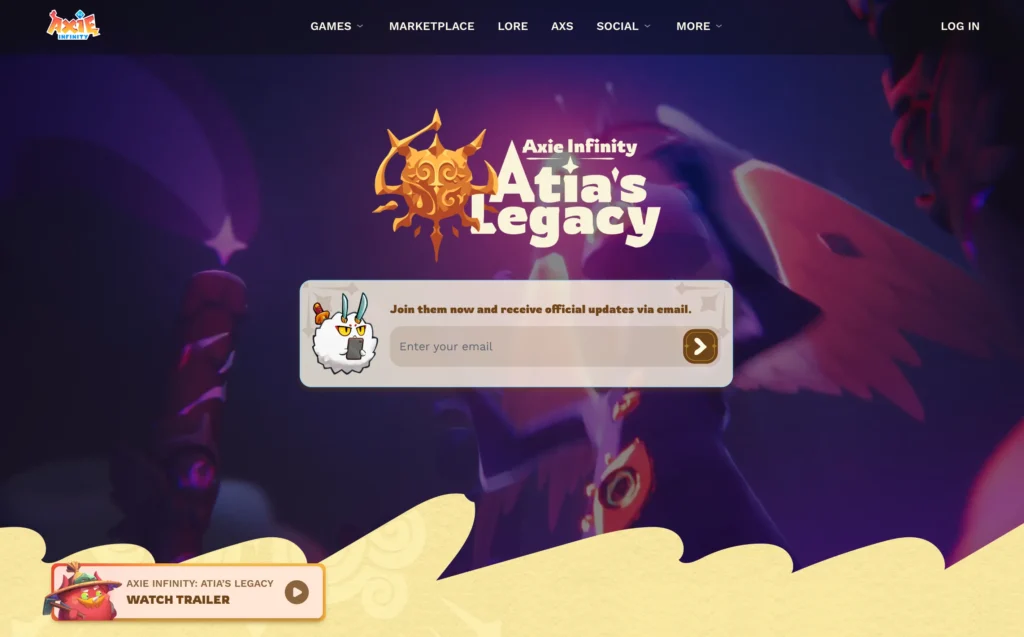
An example that almost everyone knows: Axie Infinity. It shows both the pros and cons of the model: at peak times, people really did earn significantly, but later the profitability for the “average player” became noticeably lower — because it depends on the game’s economy and token prices.
How to approach P2E sensibly:
- calculate how much it costs to enter an NFT game (purchase of NFTs/heroes/items)
- understand where the “income” comes from (it doesn’t come out of thin air)
- check if there are players and demand for in-game assets
- Treat it as a side job/experiment, not a stable salary.
If the goal is to make money on NFTs without investment, P2E sometimes offers options through free starting mechanics, but in reality, most games still require time, skills, or minimal capital.
4) NFT staking (earning income without selling the asset)
NFT staking is when you “lock” your unique digital token in a smart contract and receive rewards: project tokens, bonuses, access, in-game perks. In essence, it is similar to cryptocurrency staking, but it is important to understand that NFTs do not usually participate in supporting the network; this is specifically the economic mechanics of the project.
How to earn money on NFTs through staking:
- hold NFTs → send them to staking → receive tokens/rewards
- then decide: sell rewards, reinvest, or save
Risks of staking:
- reward tokens may fall in price
- the smart contract may be vulnerable (rare, but it happens)
- “locking” limits your flexibility: if the market falls, it is more difficult to exit quickly
This is a good way to earn passive income if you already believe in the project and are holding NFTs for the long term.
5) Renting NFTs (rent/lease)
Renting is when you don’t sell your NFT, but lease it for temporary use and receive a fee or share of the income. Most often, such opportunities for earning money are found in gaming and metaverse projects:
- renting in-game characters/items
- renting land/spaces
- renting “access” (membership) for a period of time
The advantage of renting: the NFT remains your asset, and you still receive income.
The downside: not every NFT is in demand for rental. What matters here is the real use case, not “beautiful art.”
6) Airdrops and whitelists (NFTs for free or almost free)
This is a favorite area for beginners and one of the most popular ways to obtain non-fungible tokens, because here you can really start earning on NFTs with small investments, and sometimes with almost no investment at all:
- A whitelist (WL) gives you the right to buy a unique token at launch at a fixed price (usually lower than the market price later on).
- airdrop — free distribution of tokens/NFTs to active community members
How people get WL and airdrops:
- participate in project activities (Discord/social networks/events)
- create content, help the community, test the product
- hold certain tokens/NFTs that entitle them to the distribution.
Reality: this is not a freebie, it is payment for your time and attention.
The main risk: scammers. Airdrops are often used to disguise phishing and attempts to steal your crypto wallet (all access and funds). Never enter your seed phrase, don’t sign “unclear transactions,” check domains and official links.
7) Investing in NFT projects in the early stages
This is closer to venture capital, but the mechanics are clear:
- you find a promising project before the hype
- enter at an early mint or buy NFTs
- earn if the project really grows and demand appears
What distinguishes a promising project from a beautiful dummy:
- understandable utility (which makes each token useful)
- a strong team and transparency
- a real community, not bots
- the economy (tokenomics) does not look like a “pyramid”
- partners, integrations, product releases
Beginners are better off starting with very small amounts and with the mindset that early investments = high risk. This is not a deposit or bank interest.
Popular platforms: where to buy and sell NFTs
OpenSea
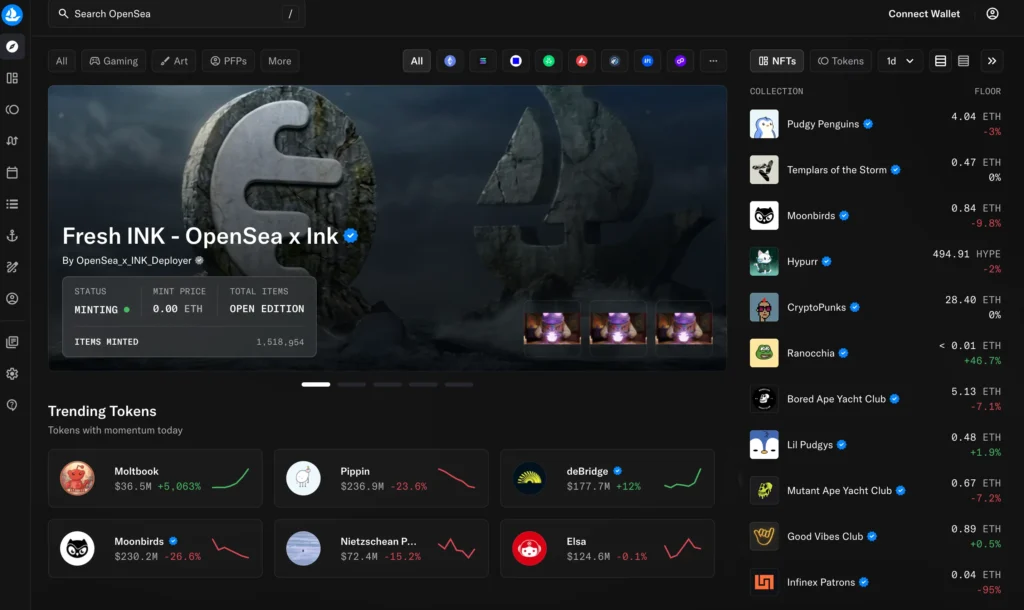
The most recognizable platform for buying/selling NFTs (especially on Ethereum and compatible networks). Important: take into account the platform’s service fees and network gas. OpenSea separately describes its typical fees, including 1% on sales.
Blur
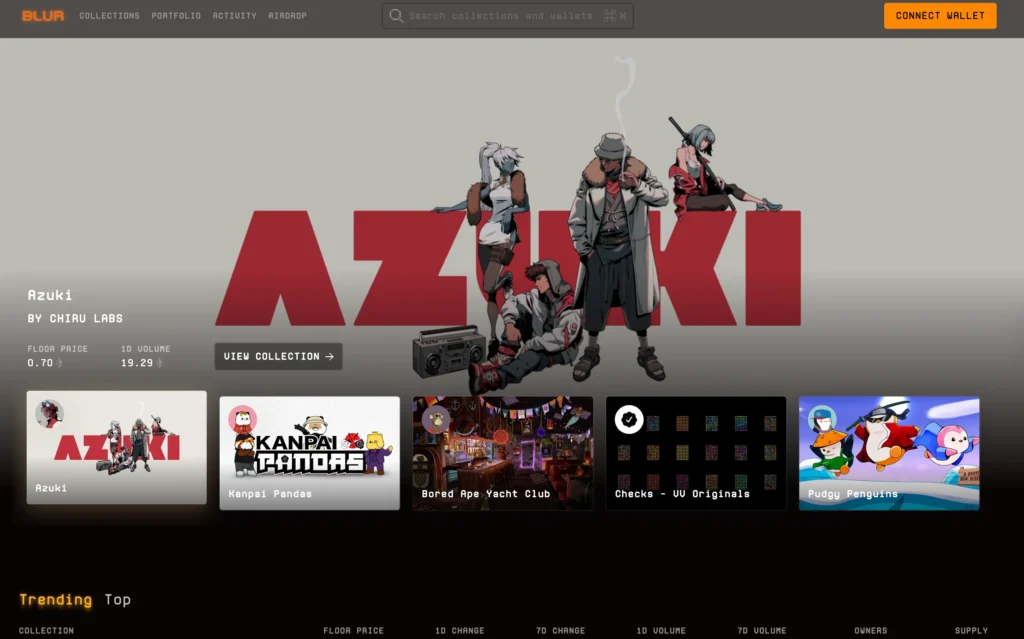
A platform often chosen by active traders because of its speed and “trading” interface. In 2024, a model with a 0.5% trading fee and changes in the mechanics of creator fees and auctions was discussed.
At Blur, as with other platforms, conditions are subject to change, so focus on the current rules and economics of the transaction.
Rarible
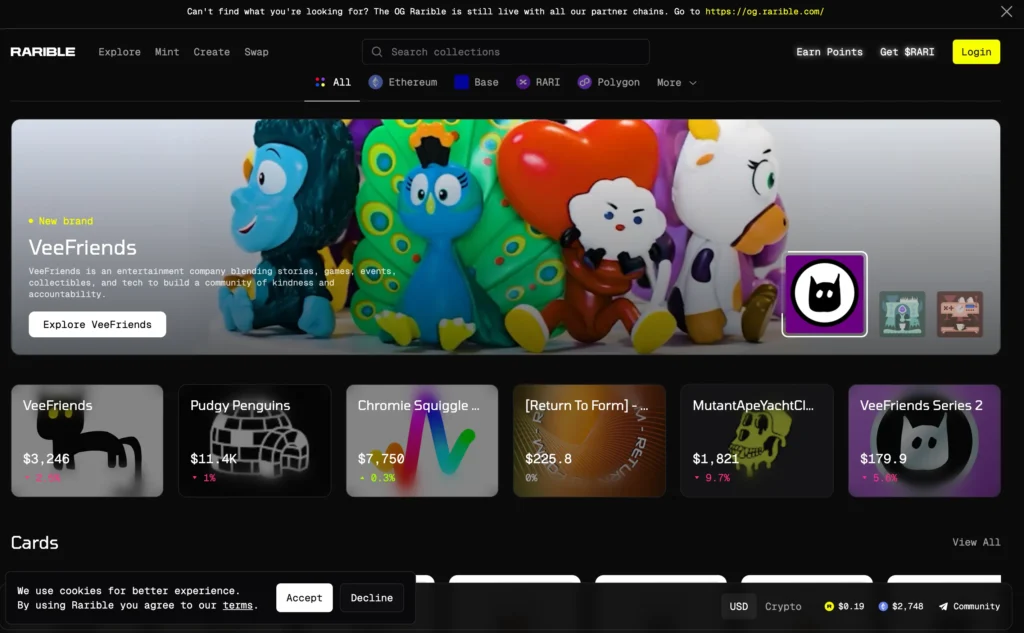
A marketplace that has historically been friendly to creators and collectors. Rarible has a floating service fee structure (the lower the price, the higher the percentage), which is officially described in their help section.
Binance NFT
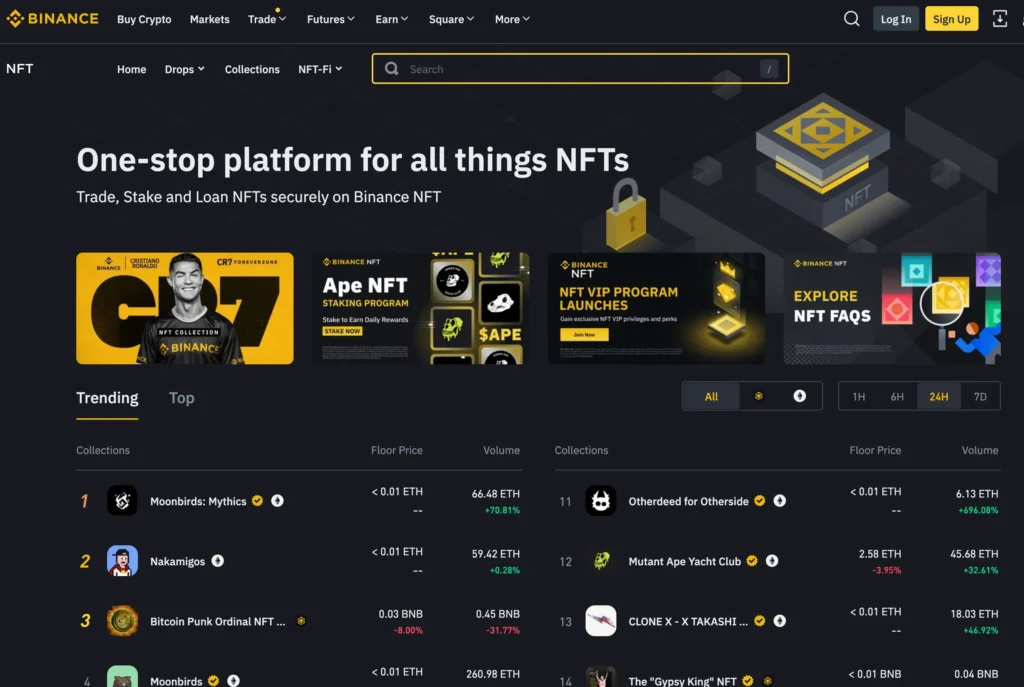
A marketplace within the Binance ecosystem. Convenient for those who already use the site and want to buy/sell NFTs on Binance without unnecessary transitions. Terms and fees depend on the platform’s rules/levels, so it is important to check the current parameters before trading.
Practical choice of platform:
- if you want to “just buy/sell” and check out the market — OpenSea
- If you want to actively trade — Blur
- If you want a more creator-oriented approach — Rarible
- If you already live in Binance — Binance NFT
How much can you earn from NFTs: real cases and down-to-earth figures
Real high-profile cases
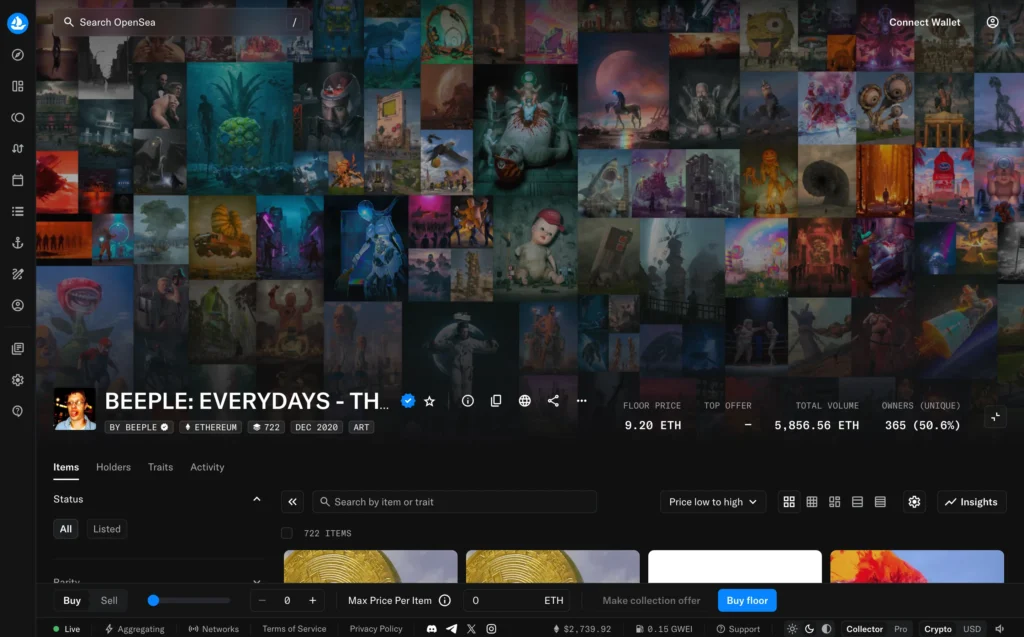
Beeple sold Everydays: The First 5000 Days for $69.3 million at Christie’s — this is one of the most famous NFT cases, which cemented NFTs in popular culture.
CryptoPunk #7523 was sold at Sotheby’s for $11.8 million — another canonical example of the price of a digital asset.
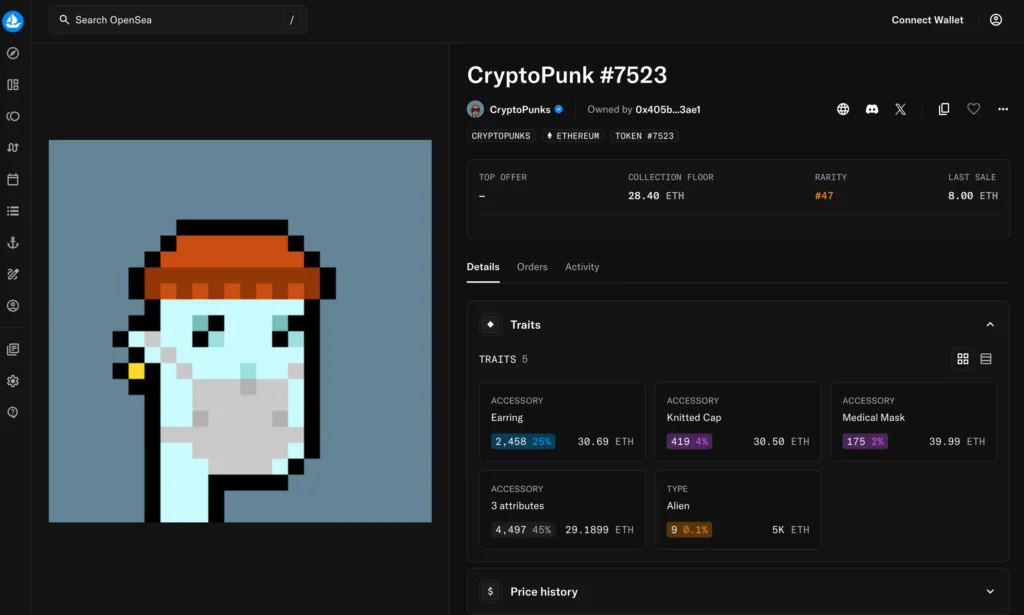
But these cases are just showcases. Most beginners earn money differently and much more modestly.
How it looks for beginners (example scenarios)
Scenario A: earning money on flips (small budget)
- budget: $100–300
- goal: 1–3 successful flips per month
- Reality: you can earn $20–200+ in good months, or you can end up in the red due to commissions and falling demand
- Key skill: choose projects with liquidity and don’t be greedy when exiting
Scenario B: medium budget and discipline
- Budget: $500–1500
- Strategy: 70% — “more liquid” collections/categories, 30% — experiments
- Income: highly volatile; stability does not come from “guessing,” and you need to constantly monitor the market: analysis, limits, profit-taking, avoiding FOMO
Scenario C: creator (artists and creators)
- income depends on the size of the audience and the value of the collection
- even small collections can be profitable if they have a clear idea and demand, rather than just “posting 5,000 pictures”
Important: count your net profit, not “I sold it for more.” Marketplace commissions and gas easily eat into a small margin, especially with cheap tokens and frequent transactions.
NFT market risks (which most often break newbies)
- Volatility
- The price of an NFT depends on demand, market sentiment, the price of ETH, and the hype surrounding the project.
- Low liquidity
- You may own a “beautiful” NFT for digital art that simply has no one to buy it.
- Scammers and fakes
- Fake collections, phishing sites, airdrops with malicious contracts.
- Wash trading and artificial volume
- Sometimes trading volumes are inflated to create the illusion of demand.
- Commissions and gas
- Sometimes transaction fees make small trades pointless.
- Legal and copyright risks
- You can “tokenize” anything, but that doesn’t always mean you have rights to the content. Plus, taxes and reporting can be an unpleasant surprise depending on the country.
Tips for beginners: how to start making money on NFTs and not lose your head
- Start with the goal of “learning and keeping your deposit” rather than “hitting the jackpot” with valuable NFTs.
- Use a separate wallet for NFT activity and do not store your seed in the cloud/notes.
- Check collections: official links, verification, contract address.
- Count everything: purchase price + gas + platform commission + potential gas for sale.
- Don’t buy what you’re not ready to hold if the sale doesn’t happen quickly.
- Avoid FOMO: it’s better to miss a deal than to buy at the peak.
- Respect liquidity: trading volume is more important than the “beauty” of the collection.
- In P2E and staking, understand where the income comes from and who pays for it.
- Diversify: don’t put everything into one token/one project/one mechanism.
- Keep a transaction log: what you bought, why you bought it, at what price you will exit, what went wrong.
Conclusion
It is possible to earn money with NFTs: through reselling tokens, creating collections, games, staking, renting, airdrops, and early investments. But the key to profit is almost always the same — discipline, security, and the ability to choose assets with real demand.
Start your crypto exchange with Coin24

Exchange BTC, ETH, USDT and more — cash or card
Secure and fast crypto exchange since 2018
Buy or sell
100+
cryptocurrencies quickly and easily
Exchange crypto with cash or
card with Coin24
Exchange crypto
online
or in person in 50+ cities
Buy or sell cryptocurrency
via Privat24
Similar Articles


18.10.2023
In this article, we will look at what an NFT is in simple words, how to create your own token, and tell you about the most promising NFT projects for investment.

20.01.2023
Axie Infinity is a play-to-earn card game that uses non-fungible tokens (NFTs) and virtual currencies. Most commonly, Aksi Infinity is depicted as a Pokémon-style game where players interact with virtual pets named Aksi rather than Pokémon. NFT is Axi, as well as objects inside the game, and SLP and AXS cryptocurrency tokens are in-game money.