Anonymous cryptocurrencies — top private coins and how they work
The concept of anonymity in the digital economy is increasingly being discussed not only among blockchain enthusiasts, but also in everyday financial practice. Despite the popularity of cryptocurrencies, not all of them are truly confidential.
On the contrary, most digital assets, including Bitcoin and Ethereum, are highly transparent. In this article, we will explore what anonymous cryptocurrencies are, why interest in them is growing, and what technologies underlie them.
The first anonymous coin was called XCoin, later renamed DarkCoin, and later still to the well-known Dash, which we will discuss a little later.
What is an anonymous or private cryptocurrency?
An anonymous cryptocurrency is one that uses data concealment technologies, allowing not only the addresses of senders and recipients to be hidden, but also the amounts and, in some cases, the fact that a transaction has taken place. Private coins are built on protocols that provide a high level of security and confidentiality for transactions, unlike most public blockchains, where the entire history of transfers is available for viewing.
It is important not to confuse the concepts of “pseudonymity” and “anonymity.” For example, Bitcoin provides pseudonymity — addresses are not directly linked to the user’s name, but if desired and with additional transaction data, tracking is possible. In the case of anonymous cryptocurrencies, this possibility is technically excluded.
Why users choose private coins
Interest in such assets is not only driven by the desire to hide finances. Completely anonymous coins are popular for the following reasons:
Protection of personal data. People do not want their financial activity to be under constant surveillance.
Increased level of freedom. In some regions, cryptocurrencies are subject to strict regulation or are blocked altogether.
Basic principles of digital privacy. For many, the idea of independence from government and commercial structures is important.
It is also worth considering that in the context of growing digital surveillance, anonymous cryptocurrencies are becoming not only a tool but also a reaction to restrictions.
How anonymity works in blockchain
Each anonymous cryptocurrency uses its own method of hiding information. Here are the key technologies used to ensure privacy and help understand what anonymous coins are:
RingCT
Ring signature technology is used in the Monero coin. When sending a transaction, the sender joins other network users in a so-called ring, where all addresses look the same. Thus, it is impossible to determine who exactly sent the funds. The amounts are also encrypted.
zk-SNARKs
A zero-knowledge proof mechanism. Used in Zcash, it allows you to verify the authenticity of a transaction without revealing any data. The sender, recipient, and transfer amount remain confidential.
CoinJoin
A method of grouping transactions used in a number of wallets and in the Dash cryptocurrency. Several transfers are combined into one transaction, making it virtually impossible to trace who sent what to whom.
Mimblewimble
A lesser-known but extremely effective protocol used in Beam and Grin. It allows you to completely delete the transaction history from the blockchain after confirmation, making it lighter and more private.
Hidden addresses
Disposable public addresses created for each transaction prevent the possibility of linking actions to the same wallet.
Popular anonymous cryptocurrencies
Below are the main projects that have earned a reputation as private coins and are focused on confidentiality. Each of them (for example, Monero and Zcash) uses different approaches to ensure anonymity and confidentiality.
Monero (XMR)
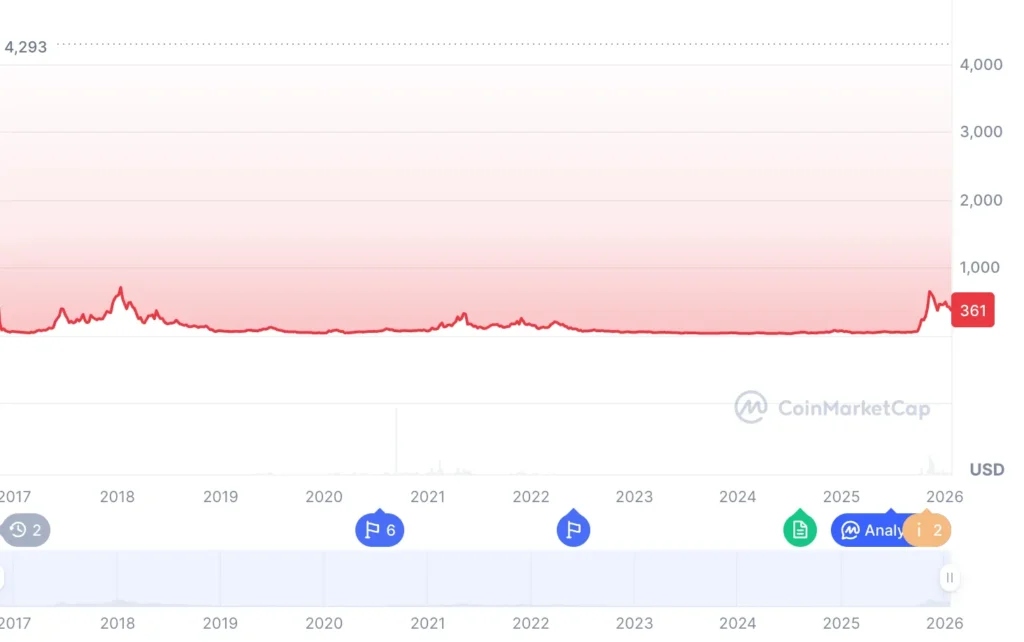
Perhaps the most well-known and technologically mature confidential cryptocurrency. The Monero blockchain uses the CryptoNote protocol and employs ring signatures for transparency, hidden addresses in the Monero network, and RingCT for amount encryption. It is a truly anonymous currency in which every transaction is private by default. Monero also does not provide the ability to switch between public and private modes.
Zcash (ZEC)
Unlike Monero, Zcash uses a hybrid approach. The user can choose to send a transparent or shielded transaction. The zk-SNARKs protocol underlying Zcash allows for a high level of privacy. However, not all wallets and cryptocurrency exchanges support shielded addresses, which reduces the effectiveness of privacy in real-world use.
Dash
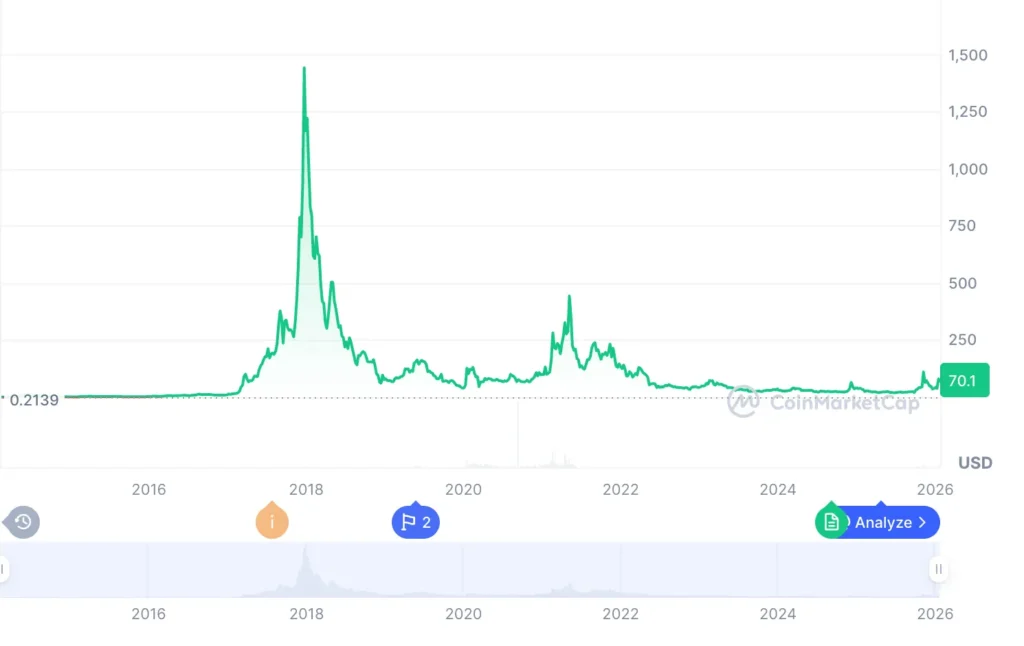
The first anonymous cryptocurrency was created as a fork of Bitcoin with an emphasis on privacy and speed. The PrivateSend technology implemented in Dash uses the CoinJoin method. Despite improved anonymity compared to Bitcoin, Dash cannot be called a completely private cryptocurrency. Rather, it is a compromise between convenience and a basic degree of data concealment.
Komodo
A platform with extended support for decentralized applications and the option of private transactions using zk-SNARKs. Although Komodo is not as well known as XMR or ZEC, it deserves attention for its flexibility and functionality.
Bytecoin
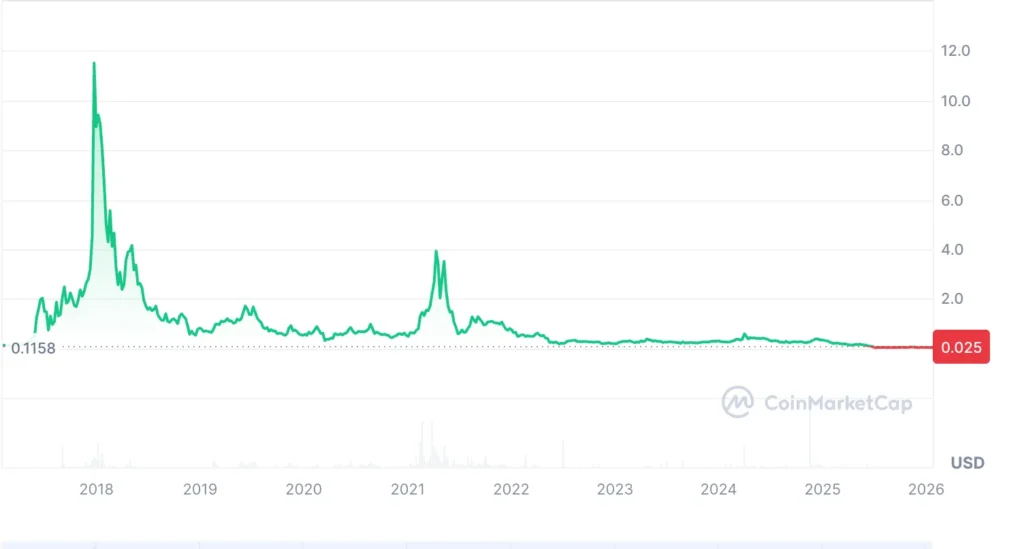
One of the first implementations of CryptoNote, from which Monero subsequently split off. Despite its historical significance, the project has lost relevance due to issues with developer transparency and technical shortcomings.
Verge
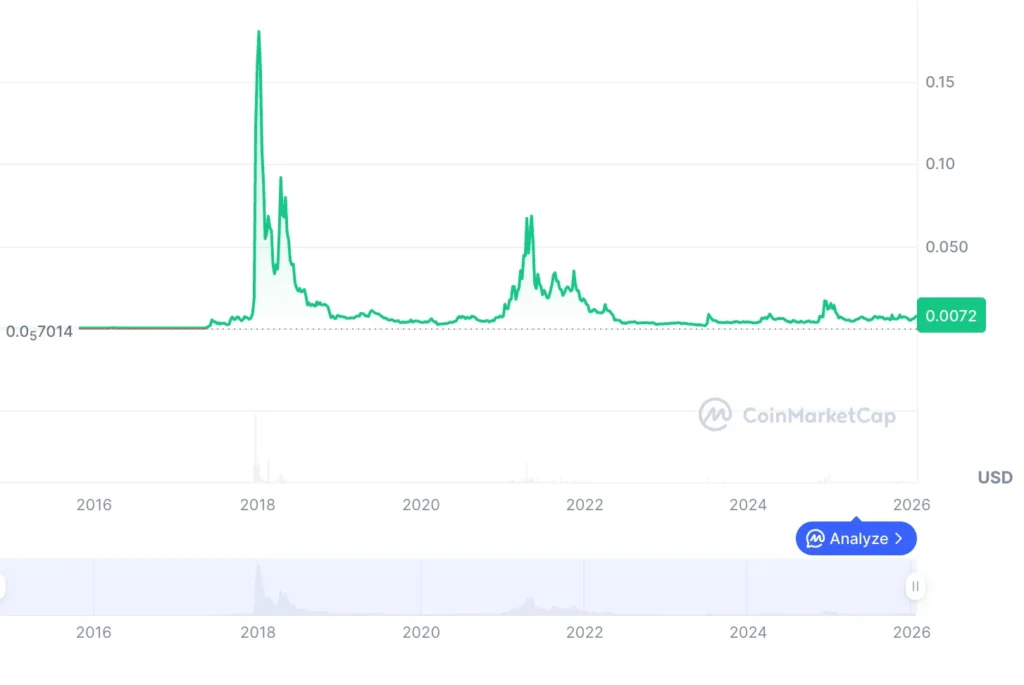
Focuses not so much on hiding data in the blockchain as on anonymizing network traffic. To do this, the cryptocurrency uses Tor and I2P. This hides IP addresses and increases user privacy, but not the essence of the transaction in the blockchain.
Beam and Grin
Both coins are based on Mimblewimble. These are relatively young projects with a strong cryptographic focus. Unlike Monero or Zcash, they do not hide the participants in the transaction directly, but make it impossible to recover the blockchain history.
Advantages of private coins
The use of anonymous cryptocurrencies can be justified in a variety of situations. Here are the main advantages:
Personal data and financial activity are not publicly accessible.
Countering surveillance by government and private entities.
The ability to freely move digital assets without the risk of being tracked.
Independence from political regimes and financial restrictions.
For many, privacy is not a whim, but a basic right.
Risks and limitations
It is worth remembering that anonymous cryptocurrencies often come under the scrutiny of regulators, for whom the fight against money laundering is important. Here are some of the problems users may encounter:
Delisting from centralized exchanges due to pressure from regulators.
Legislative bans in some countries.
The association of private coins with illegal activities such as money laundering and terrorist financing.
Liquidity issues on some platforms.
Some countries, including Japan and South Korea, have completely banned trading in anonymous coins within their territories. International AML standards and FATF recommendations are also exerting pressure.
Where to buy and how to store confidential coins
Such assets can be purchased on both centralized and decentralized platforms. However, not all exchanges are willing to support private coins due to legal risks.
Centralized exchanges:
KuCoin
Gate.io
OKX (limited)
Decentralized solutions:
Bisq
TradeOgre
AtomicDEX
For storage, it is better to use wallets that support confidential functions. In the case of Monero, these can be Feather Wallet or the GUI client from the official team. It is also recommended to use TOR or VPN to increase the level of anonymity.
What does the future hold for anonymous coins?
The prospects for such assets are contradictory. On the one hand, there is growing pressure from governments, and on the other, there is increasing interest in zero-knowledge technologies and new cryptographic protocols. Privacy is likely to become a built-in component of many future blockchains, rather than an exception to the rule.
The development of DAO, Web3, and DeFi may contribute to the popularization of built-in privacy solutions, where experiments with data concealment are already becoming part of the standard user interface.
_________
Anonymous cryptocurrencies are not just a way to hide transaction details. They are an important element of the decentralized digital economy, allowing people to retain control over their own data. However, the use of private coins comes with a number of risks, including access restrictions and regulatory scrutiny. The choice in favor of Monero, Zcash, Beam, or other solutions must be informed and take into account both the technical aspects and the legal side of the issue.
Two rates of 10% per year can yield different returns, and the difference can sometimes become hundreds of dollars per position. It all comes down to the three letters before the percentage. APR and APY are being used at every turn in the cryptocurrency space: exchanges advertise APY rates on DeFi platforms, lending services display APR on loans, and the numbers next to these abbreviations look similar, even though they mean different things.
It’s important for investors to understand the difference between APR and APY, if only because platform marketers understand it perfectly well and always highlight whichever metric looks more attractive. So let’s break down what APR and APY are, provide the formulas, calculate examples using real numbers, and show where each metric is appropriate.
Open the chart for any cryptocurrency on an exchange or in TradingView, and you’ll almost certainly see the MACD among the built-in tools. It’s one of the most recognizable elements of technical analysis: it’s used by both beginners who are just getting started with crypto trading and professional fund managers. The reason is simple. The […]
BONK experienced a hard fall in May 2026. The current price is around $0.000004594, about 92% below the ATH (all-time high) of $0.00005898 set on November 20, 2024. The token still attracts a lot of attention, mostly because it is at the center of Solana’s meme economy. So, which BONK price forecast is grounded enough […]

 Business