How to buy cryptocurrency before it hits the exchange: a beginner’s guide
Buying cryptocurrency before listing is an attempt to get into a project at an early stage, when the token is not yet traded on major exchanges and is often available through presales or special platforms. It sounds tempting: the price may be lower, and early investors are sometimes given bonuses or more favorable terms. But there is also a downside: the risk is higher, liquidity is limited, and fraud is more common in this area.
In this guide, we will discuss where and how to buy crypto before official listing, the differences between ICO, IEO, IDO, and launchpads, where to look for promising projects, how to participate safely, and how to determine whether it is worth investing at all.
Disclaimer: This material is for informational purposes only and is not an investment recommendation.
Why it is profitable to buy cryptocurrency before it is listed on exchanges
The main reason why people look for “cryptocurrency before listing” is simple: they want to get into the project before the market does. Sometimes, investing in cryptocurrencies before their official release does indeed offer advantages.
What can be the advantages of buying cryptocurrencies at an early stage:
Lower price relative to future listing (not always, but sometimes).
Early access to tokens, whitelists, and allocations.
The opportunity to enter a niche before it becomes popular.
Sometimes buying before listing comes with additional mechanics: bonuses, access to the product, roles in the community.
What is important to remember (and is often forgotten):
There is almost always vesting (unlocking tokens in parts), and you will not get “everything at once.”
Before listing, liquidity is limited — it can be difficult to sell tokens, even if the “price has risen on paper.”
After listing, the price often behaves unpredictably: both growth and a sharp decline are possible.
Main formats of early participation
Early token purchases usually take one of four formats: ICO, IEO, IDO, or through launchpads. The difference is who organizes the sale, how strict the project verification is, and what the requirements for participants are.
ICO (Initial Coin Offering): cryptocurrency investments for experienced investors
An ICO project sells its tokens directly to investors. Most often, this is done through the official website, a smart contract, or the project’s own platform.
How it works in practice:
the project announces the terms of the token sale (price, period, limits, payment currency);
the investor sends funds (e.g., ETH/USDT) and receives tokens (immediately or upon vesting).
Pros of ICO:
sometimes the earliest entry;
may have simpler participation mechanics.
Cons of ICOs:
higher risk of fraud, because there may be no “filter” in the form of an exchange;
it is easy to fall for a fake website/fake links;
it is often more difficult to assess the real reliability of the project.
IEO (Initial Exchange Offering)
IEO — the sale of tokens through a centralized exchange. The exchange acts as a platform where the placement takes place, and users buy tokens through the exchange interface.
Pros of IEO:
the exchange usually conducts an initial review of the project;
easier to participate: account, balance replenishment, purchase according to the exchange rules;
it is often clearer how the listing will take place.
Cons of IEO:
KYC is almost always required;
high competition for allocations;
participation conditions may require holding a certain asset (e.g., exchange token) or complying with limits.
IDO (Initial DEX Offering)
IDO is a format associated with decentralized exchanges (DEX) and DeFi infrastructure. Tokens are often sold through a launchpad in the DEX ecosystem or through liquidity pools.
Pros of IDO:
participation without a centralized intermediary;
sometimes easier to get in without “exchange rules,” but it depends on the platform.
Cons of IDO:
you need to understand wallets, networks, commissions (gas fees);
liquidity in the first hours/days may be “thin,” the price fluctuates more strongly.
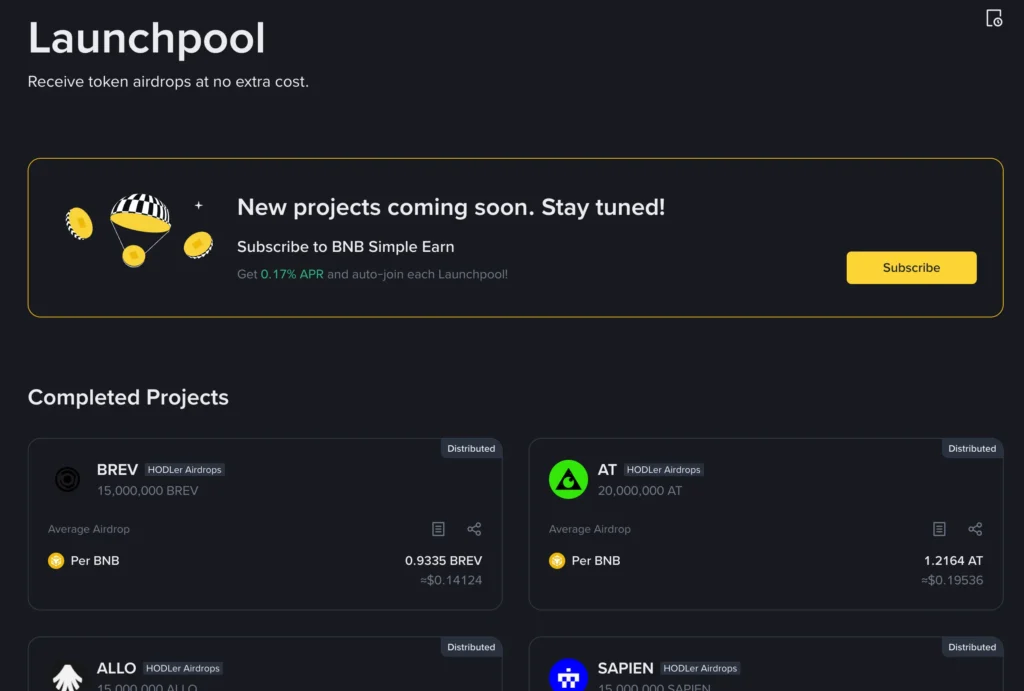
Launchpads (e.g., Binance Launchpad, Bybit, and others)
Launchpad is a “showcase for launches into the world of cryptocurrencies,” where the platform selects projects and conducts cryptocurrency sales before listing or according to its own rules. In practice, this can be:
token subscription (allocation);
lottery/random;
balance/staking requirements;
separate mechanics such as launchpool (farming tokens for holding another asset).
How it is similar to IEO:
participation often goes through CEX, with KYC and requirements;
it is easier for the user than in a “pure” IDO.
How it differs:
launchpad usually structures launches: calendar, access rules, distribution.
Comparison of formats: ICO vs IEO vs IDO vs Launchpad
Format Where it takes place What you need Who it is suitable for Main risks
ICO project website/smart contract wallet, network, attention to links those who are ready to dig deeper high risk of scams/fakes
IEO centralized exchange account and KYC, balance beginners who want it to be easier competition, limits, exchange conditions
IDO DEX/DeFi launchpad wallet, gas fee, knowledge of the network those familiar with DeFi technical risks, fakes, volatility
Launchpad exchange/launch platform KYC (often), fulfillment of conditions those who want a “semi-ready” scenario balance and allocation requirements
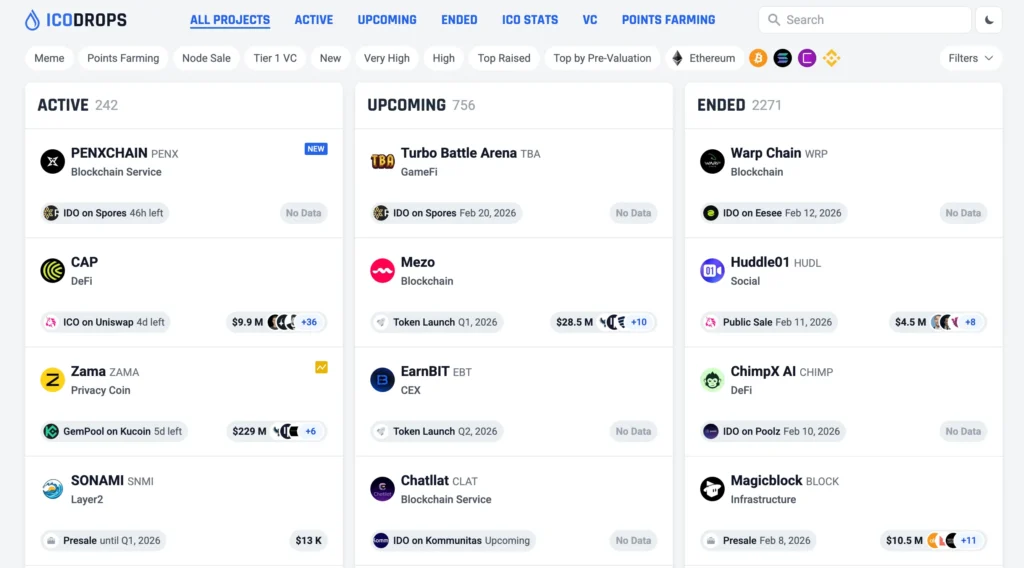
Where to look for promising projects: potential profit before official listing on exchanges
A key mistake beginners make is looking for a lot of tokens before listing where there is a lot of hype but few facts. It is better to build your search around sources that can be verified.
What to study:
official project channels: website, blog, X (Twitter), Telegram, Discord;
announcements and launch calendars (as a guide, but not as a guarantee of quality);
community discussions: Reddit, specialized forums (it is important to filter out advertising and shilling);
partnerships: who is actually integrating with the project (decentralized exchanges, launchpads), is there any confirmation.
Safety rule: double-check all links (especially in Telegram) through the official website or verified accounts. Scammers often copy names and visuals exactly.
How to participate in presales: a reliable step-by-step plan
Below is a universal scheme that is suitable for most cases (ICO/IEO/IDO/launchpads). Specific details always depend on the platform.
Choose a potential format for participation: ICO, IEO, IDO, or launchpad.
Prepare the infrastructure:
for CEX: account + 2FA;
for DEX: wallet (e.g., EVM wallet), required network, funds for commissions.
Complete KYC if required (usually on CEX/launchpad).
Top up your balance with the asset you need to make the purchase (USDT/ETH/BNB, etc.).
Fulfill the conditions: whitelist, subscription, platform token holding, staking — whatever is specified in the rules.
Participate in the sale: buy new tokens before they appear / receive an allocation.
Check the issuance conditions: is there a vesting period, the ability to purchase tokens directly, an unlock schedule, dates.
After receiving tokens — storage: wallet/exchange, security measures.
At the time of listing, think about your risk plan in advance: are you ready for high volatility and low liquidity?
How to understand whether it is worth investing: a quick checklist
The opportunity to buy a new cryptocurrency in its early stages is not a “guessing game” but working with probabilities. None of the points below guarantee success, but together they reduce the chance of getting involved in a frankly weak or fraudulent project.
Project team: real people, verifiable profiles, relevant experience.
Product: what has already been done, is there a demo/prototype/users, upcoming milestones.
Signs of pressure: “only today,” “guaranteed profit,” aggressive promises.
Link security: does the domain match, are there fake bots/channels.
If you see aggressive marketing without a product, murky tokenomics, and “guaranteed profits,” this is a signal not to “buy tokens before listing on exchanges,” but to stop.
Risks of early investments: how to buy and sell new cryptocurrency before listing with minimal risk
It is important to state this clearly: in the early stages, the risk is higher than when buying a cryptocurrency that is already traded on an exchange.
The main risks are:
Volatility: after listing, a sharp “dump” is possible.
Low liquidity: new tokens are difficult to sell without significant slippage, especially on DEX.
Vesting/lock-up: tokens may be locked for months.
Fraud: fake websites, fake new projects, phishing in Telegram.
Regulatory restrictions: some sales are not available to residents of certain countries.
Risk of “not going public”: the project may delay the launch or not complete it.
How to buy a coin correctly: tips for beginners
Start small: it’s better to lose a small amount of cryptocurrency while “learning the market” than to go in big without understanding the mechanics.
Diversify your portfolio: don’t put all your eggs in one basket before listing.
Always check official sources and contract addresses.
Use 2FA, do not store your seed phrase in notes/screenshots, and do not click on “urgent” links.
Consider commissions (especially on DEX): sometimes gas fees “eat up” the value of small purchases.
Conclusion
There are various ways to buy cryptocurrency before listing — through ICO, IEO, IDO, or launchpads. But the earlier you enter, the more important your verification is: the team, tokenomics, vesting conditions, link security, and the actual product are more important than any promises or hype. Therefore, the cryptocurrency market is only accessible to those who study it thoroughly.
If you are a beginner, choose the most understandable format of participation, follow the checklist, and treat early investments as a high-risk area. The cryptocurrency market is only accessible to those who study it thoroughly.
Two rates of 10% per year can yield different returns, and the difference can sometimes become hundreds of dollars per position. It all comes down to the three letters before the percentage. APR and APY are being used at every turn in the cryptocurrency space: exchanges advertise APY rates on DeFi platforms, lending services display APR on loans, and the numbers next to these abbreviations look similar, even though they mean different things.
It’s important for investors to understand the difference between APR and APY, if only because platform marketers understand it perfectly well and always highlight whichever metric looks more attractive. So let’s break down what APR and APY are, provide the formulas, calculate examples using real numbers, and show where each metric is appropriate.
Open the chart for any cryptocurrency on an exchange or in TradingView, and you’ll almost certainly see the MACD among the built-in tools. It’s one of the most recognizable elements of technical analysis: it’s used by both beginners who are just getting started with crypto trading and professional fund managers. The reason is simple. The […]
BONK experienced a hard fall in May 2026. The current price is around $0.000004594, about 92% below the ATH (all-time high) of $0.00005898 set on November 20, 2024. The token still attracts a lot of attention, mostly because it is at the center of Solana’s meme economy. So, which BONK price forecast is grounded enough […]

 Business