
 Business
 According to the latest data from CoinMarketCap, there are more than 30 million cryptocurrencies in the world, and as we can see from the chart, their number is growing exponentially.

8 min.
15.12.2025
Day trading and volatility: how to profit from short-term fluctuations in cryptocurrencies
Day trading (day trading) is intraday trading, when all positions on a selected asset are opened and closed within a single trading day. A day trader does not carry trades overnight: each trade lasts from a few minutes to several hours, and by the end of the trading day, the position is completely closed.
In the traditional stock market, day trading is associated with stocks, while in the cryptocurrency market, it is associated with cryptocurrencies and derivatives. In both cases, the logic is similar: traders use short-term market noise and price fluctuations to make money by buying and selling within a single day.
This type of day trading attracts active people who want to manage their own financial results but are also willing to take on increased risk. On liquid exchanges and in pairs with high liquidity (BTC, ETH, USDT, etc.), trading is constantly taking place, local highs and lows are forming, and it is these movements that traders use.
Volatility: fuel for intraday trading
The key word for a day trader is volatility. This is the degree to which the price of an asset changes over a certain period. The stronger and more frequent the upward and downward fluctuations, the greater the chances of finding a profitable entry and exit point.
In the crypto market, volatility is traditionally higher than when trading stocks: news, tweets, regulatory statements, large orders — all of this creates reversals, pullbacks, rebounds, consolidation phases, and short impulse trends. It is important to understand that:
- high volatility = more opportunities;
- but the potential financial loss in case of a mistake also increases.
For an intraday strategy, it is important to be able to distinguish between an uptrend and a downtrend, to see areas of correction, ranges of compressed volatility, and levels where a new breakout is likely.
The essence of day trading on crypto exchanges
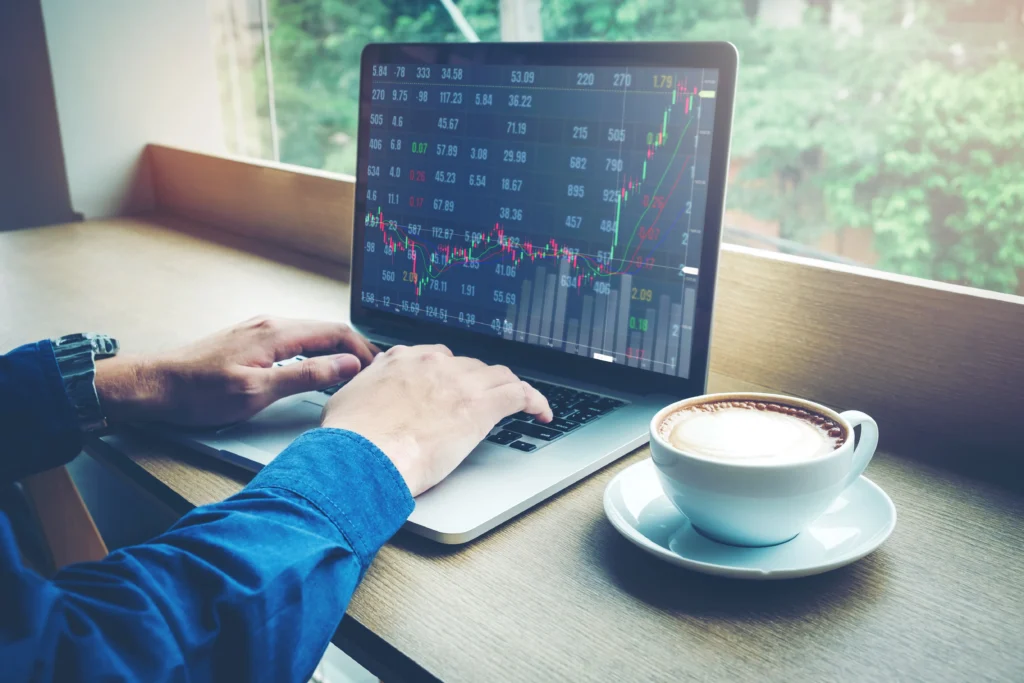
In intraday cryptocurrency trading, a day trader works according to roughly the same pattern:
- Analyzes the market before the start of the trading session. Looks at the general trend, chart, news, and highs and lows over the last few days.
- They determine key support and resistance levels (also known as support and resistance levels) and possible scenarios: breakout, pullback, reversal, consolidation.
- They choose a trading strategy for the day: trend, countertrend, day trading strategies based on news, etc.
- Opens an order (long or short) on the selected asset, sets a stop loss and target take profit.
- Manages the position during one trading day: can partially close, move to break-even, or strengthen when an uptrend or downtrend is confirmed.
- At the end of the day, the position is closed regardless of the result so as not to carry the risk overnight.
Unlike the long-term approach, where the investment horizon and slow position building dominate, here the accuracy of entry and exit, speed of decision-making, and discipline are important.
Technical and fundamental analysis in day trading
Intraday, technical analysis is at the forefront. Traders actively use:
- Japanese candlestick charts;
- indicators (RSI, MACD, volumes);
- moving averages;
- local lows and highs;
- consolidation patterns, breakouts, false breakouts, and rebounds from levels.
Fundamental analysis is also important in the crypto market, but it works differently than in the classic investment approach. For day trading, important news and news releases are important: listings, protocol updates, regulatory events, major partnerships. Trading strategies are often built around the market’s reaction to such events: this is news trading.
By combining technical and fundamental analysis, you can develop a trading system where the trigger for entry is an event or zone on the chart, and the exact moment is determined by indicators and price behavior.
Popular day trading strategies
Among the popular day trading strategies in the crypto market, several basic approaches can be identified.
1. Scalping
Scalping is frequent trading with a large number of transactions within a single day, where the profit from a single transaction is minimal but is offset by the number of transactions. The trader works in conditions of high liquidity, often using market orders and short stop losses.
Suitable for experienced traders who have a good feel for the market, are able to make quick decisions, and are not afraid of high speed.
2. Trading from support and resistance levels
Support and resistance levels play a key role here. The logic is simple:
- support is expected to rebound upwards;
- resistance is expected to reverse downwards or correct;
- a breakout of the level can trigger a new uptrend or a move towards a downtrend.
This strategy is based on the fact that many traders look at the same areas on the chart, which is why orders and trading volumes are concentrated there.
3. News trading
Day trading strategies based on news are built around strong impulses after news releases. The trader monitors the calendar of events in advance, waits for the market reaction, assesses volatility, and enters in the direction of the impulse or on its pullback.
This approach is especially relevant for cryptocurrencies with a pronounced reaction to news. However, the risk increases: spreads widen, and price fluctuations in seconds can be huge.
Long and short in the context of day trading

In day trading, it is important to be able to work with both rising and falling asset prices.
- Long is a bet on growth: you buy an asset, expecting to sell it at a higher price within a day or several hours.
- Short is a bet on a fall: you borrow an asset from a broker or exchange on margin, sell it now, and plan to buy it back cheaper later, closing the position.
On crypto exchanges, this is implemented through margin trading and futures. Stop-loss is especially important here: without it, one unsuccessful trade can lead to a large loss.
When working with leverage and margin, it is important to remember that aggressive trading with leverage is not the best choice for novice traders. Leverage amplifies both profits and financial risk.
Risk management and the psychological factor
Even the most logical trading strategy is powerless if risk management and psychology are ignored.
Basic principles:
- The risk per trade is a fixed percentage of the deposit.
- Mandatory use of stop-loss: it should be set where the trading strategy idea ceases to be viable.
- Understanding that a series of losses is part of statistics, not a sign that “you are doing everything wrong.”
Psychologically, day trading is difficult: intraday trading forces the trader to constantly monitor the chart, make decisions in conditions of uncertainty and emotional pressure.
Often, it is the desire to “recoup losses at any cost” that breaks even a good system. Therefore, strategy development always includes rules on the number of trades per day, limits on the total financial result, and breaks after stressful situations.
Pros and cons of day trading
Pros:
- The ability to profit from price fluctuations in any phase of the trend — both upward and downward.
- No risk of overnight gaps: all positions are closed by the end of the day.
- Quick feedback: you can immediately see how profitable your chosen strategy is.
Cons
- High risk: mistakes in intraday trading quickly add up.
- Increased requirements for discipline and concentration.
- Exchange and broker commissions and spreads for frequent buying and selling.
- Not everyone is suited to the pace at which decisions must be made within minutes, and sometimes even seconds.
Who is this strategy suitable for?
Day trading is not a universal solution. It is more suitable for those who:
- are already familiar with the market and are not complete beginners;
- understand the difference between a long-term investment approach and active intraday trading;
- are willing to devote several hours a day to the market;
- are willing to develop a trading system rather than acting impulsively.
For novice traders, it is more logical to start by learning basic technical analysis, working with simulators, small positions without leverage, and understanding how the market behaves in different phases.
It is useful to choose a reliable broker in advance and develop a trading strategy, test it on historical data and a demo account, and only then move on to working with real funds on crypto exchanges and exchangers.
A brief glossary for day traders
To reinforce all of the above, let’s compile a list of key terms that you will encounter in day trading and day trading:
- During a day trading session, a day trader works with one or more assets and monitors the chart, which shows the movement of the asset price, the formation of local highs and lows, areas of consolidation, reversal, pullback, and correction.
- As part of a day trading strategy and various trading strategies, it is important for traders to correctly determine support and resistance levels, track moving averages and other indicators, understand where to place stop losses, how to use margin, and when opening and closing trades will be justified in the logic of the chosen strategy.
- When trading intraday, traders often use their experience in the classic stock and equity markets, but the cryptocurrency market is more volatile, so discipline and risk management are even more important: the quality of the strategy development determines whether the result of a single trading day will be profitable or lead to financial loss.
Day trading is a powerful tool for working with the crypto market, but it requires preparation, discipline, and respect for risks. If you are willing to learn, carefully test approaches, and gradually increase your trading volume, this strategy can be a logical step after mastering the basics of cryptocurrencies.
Start your crypto exchange with Coin24


Exchange BTC, ETH, USDT and more — cash or card
Secure and fast crypto exchange since 2018
Buy or sell
100+
cryptocurrencies quickly and easily
Exchange crypto with cash or
card with Coin24
Exchange crypto
online
or in person in 50+ cities
Buy or sell cryptocurrency
via Privat24
Similar Articles

29.12.2025
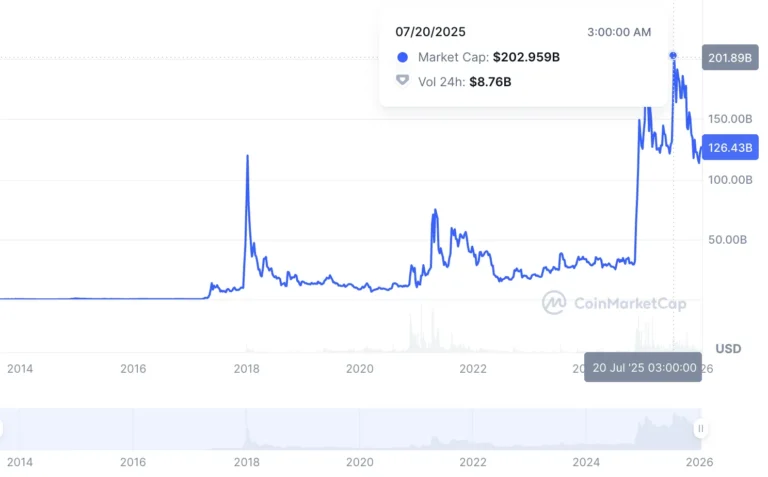
Fibonacci levels are a well-known and widely used technical analysis tool. However, not every trader knows how to use them correctly. Even experienced traders make serious mistakes when using Fibonacci levels. Some traders doubt that this indicator reflects the state of the market.
31.10.2025
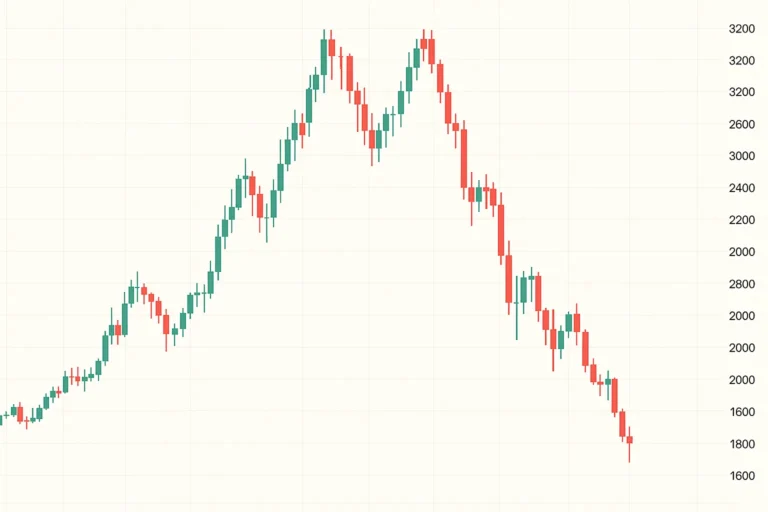
Technical analysis offers a variety of patterns that assist traders in recognizing trend reversals or weakening trends in a timely manner. Seeing such a pattern in time and taking the right action is the key to success in any financial market, including cryptocurrency.