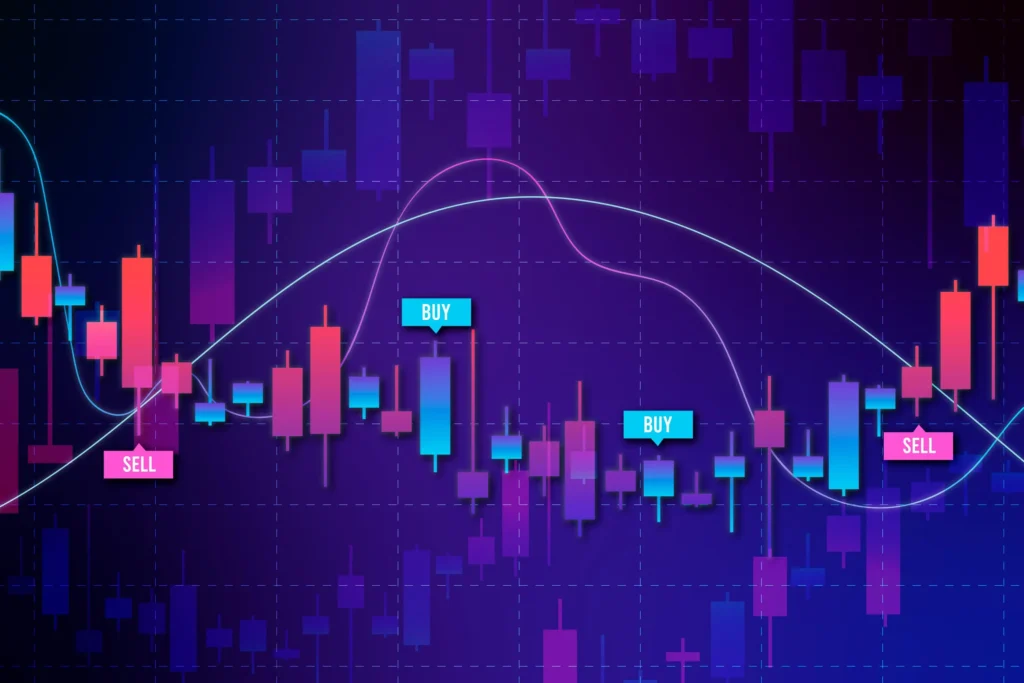
Short and long positions in cryptocurrency: a simple explanation and examples of earning
Long and short are two ways to trade on financial markets by taking advantage of an asset’s rise and fall. If you factor in commissions, interest/funding, and liquidation rules in advance, trading becomes understandable risk mathematics rather than “candlestick magic.”
Disclaimer: this material is educational and does not constitute investment advice. Margin trading and futures are high-risk instruments; if the price moves unfavorably, the position may be forcibly closed (liquidated) and the margin lost.
What are short and long positions in cryptocurrency trading in simple terms
Long — long positions: the strategy is that you buy an asset at the current price in anticipation of a rise in cryptocurrencies, followed by a sale at a higher price. Long positions are asset positions in anticipation of an upward market movement; “going long” means buying first, then selling after the price rises.
Short — short positions: betting on a decline. Shorting is based on the mechanics of “borrowing”: the trader buys tokens → sells them → buys them back cheaper → returns them, and the price difference is the profit.
There is an important difference in the risk of opening and closing a position: in traditional short selling, the trader’s loss is theoretically unlimited (the price of the asset can rise indefinitely), while a long position is not as risky: on the spot market, the maximum loss is usually limited to the purchase amount.
Where does this happen in practice? In the spot market, traders buy cryptocurrency, and the asset appears on your balance sheet.
In spot margin trading, you also trade a “real” asset, but part of the position is borrowed funds secured by collateral (margin).
Futures/perpetuals are contracts: you get price exposure with long and short positions without directly buying the coin, and the result is formed through PnL, funding, and margin rules. Therefore, the terms “long” and “short” are the same in terms of direction, but the instrument (asset vs. contract) is different.
Bulls, bears, and how to profit from market growth and decline
“Bulls” expect growth (a bull is a trader who believes in price increases), while “bears” expect a decline (a bear market is a period of falling prices and negativity). Therefore, you need to open long and short positions based on the market situation.
Further, everything comes down to the logic of what long and short positions are: a trader opens a long position and earns when the price rises, opens a short position when the price falls (low price), and closing a position is always the opposite action (selling after buying or buying after selling).
It is useful for investors to know about hedging: this is an attempt to reduce the risk of a portfolio and the value of an asset by opening a trade that is likely to move in the opposite direction (for example, a short position as “insurance” during times of volatility).
Which exchanges allow shorting cryptocurrency
Usually, “shorting cryptocurrency” means either shorting on spot margin (borrowing an asset and selling it on the spot) or opening a short position through futures/perpetuals, where you trade a contract.
Binance describes margin shorting as “borrow → sell → buy back” and warns that some products/services may not be available in your region.
OKX (EEA) writes that “margin selling (short position)” means borrowing and mandatory repurchase, and separately indicates that spot margin in the EEA is only available to users from the EEA.
Bybit sets a rule: in isolated mode, liquidation is triggered when the Mark Price reaches the Liquidation Price.
Kraken explains that margin shorts are opened by borrowing an asset and selling it at the current market price, and notes that the availability of margin services depends on restrictions and criteria.
Coinbase states in its derivatives help section that longs are opened with a buy order and shorts with a sell order; and the International Exchange page states that crypto derivatives are not available to UK retail and the platform only operates in certain jurisdictions.
How to open short and long positions and profit from rises and falls
Long on the spot market: buy an asset at the current (or limit) price (go long), close the position by selling — that is, by taking the opposite action.
Short through margin: deposit margin → borrow the asset → sell → buy back cheaper → repay the debt (plus interest).
Short/long through futures (including perpetual): open a position with a buy/sell order, close with the opposite order.
Practical advice on risk management for long and short positions: before entering a trade, decide what position size you are comfortable with, where you will exit with a stop, and what will happen to the margin in the event of a sharp price movement. This is especially important for derivatives because liquidation can be calculated based on the mark price rather than the last trade price — Binance explains the difference between mark price and last price as a way to reduce the risk of “unnecessary” liquidations during short-term spikes.
LONG trades (spot): buy → hold → sell (price increase)
SHORT (margin) trades: borrow → sell → buy back → return (price drop)
Leverage and margin trading
Margin trading = borrowed funds secured by margin; this strategy increases both potential income and the risk of rapid loss of funds.
Margin trading on CEX and DEX: buying an asset for experienced traders
In traditional margin trading on CEX, you need to transfer your assets to the exchange’s wallet before you can start trading. The exchange acts as a custodian, storing your funds on its server. This means you are under the control of a centralized system and people you have never met. You no longer control your funds.
In addition, the complex identity verification procedure (KYC) and high commissions may not be very convenient for traders.
Decentralized exchanges operate differently. Here, you are free from centralized intervention, but you also have more risk management. A broker in DeFi becomes one of the autonomous money markets. And His Majesty, the smart contract, plays a central role.
As for the security factor, it is rather questionable. On the one hand, DEX security is provided by a group of validators, and many human errors can occur. However, you are free to keep your funds safe and not transfer them to the platform. But traditional DEXs are known for sandwich attacks and slippage risks.
CEXs are more vulnerable to hacks, data manipulation, and cyberattacks. So, whatever you choose, you do so at your own risk.
Features of margin trading
In short, you can trade more than you have in your wallet. For example, you request more and trade 15 times the value of your asset.
Of course, there are certain risks. In such cases, you can lose more, but you can also earn much more. Although margin trading is a favorite tool of more experienced traders, we have developed an easy-to-use scheme that even beginners can use.
Three “trap words” you need to understand before your first trade
Borrow interest: on margin, you pay interest on the loan; Binance specifies that interest is calculated hourly, and rates change every hour.
Funding rate: in perpetual futures, these are periodic payments between long and short positions (so that the contract does not deviate from the spot price); when the funding rate is positive, long positions usually pay short positions, and when it is negative, the opposite is true.
Mark price / liquidation: Binance explains the difference between mark and last prices and emphasizes liquidation at the mark price; Bybit also describes the mark price trigger in isolated.
Two signals are “dangerous”: margin call (a requirement to increase collateral) and liquidation (forced closure of a position). Kraken defines a margin call and describes that if the margin level falls too low, the position may be liquidated.
Risks of short/long trading and examples of transactions
The Financial Conduct Authority indicates that the ban on retail access to crypto derivatives remains in place; historically, the ban came into effect on January 6, 2021.
Two examples of transactions (figures are conditional to show calculations).
Example 1: Spot long. Bought 0.02 BTC at $50,000 (= $1,000). Sold at $55,000. Profit before commissions: 0.02 × (55,000 − 50,000) = $100.
Example 2: margin short. Borrowed 0.1 BTC, sold at $50,000 (= $5,000). Repurchased at $45,000 (= $4,500). Gross profit: $500, but then commissions and borrow interest are deducted (on Binance — hourly, floating rates).
Final thought: opening a short or long position in trading and investing means not pressing the “earn button”; these are tools for earning on market declines and growth. The more honestly you calculate margin, leverage, commissions, and holding costs (interest/funding), the fewer surprises you will have, and the better long and short positions will work.
Mini-check before entering: check where your margin call and liquidation are, and how much it will cost to hold the position — interest on the loan or funding rate.
This is especially relevant if you need a simple purchase or sale of cryptocurrency without futures and margin risks. To make this task easier, check out the Coin24 pages “Buy” and “Sell.”
Two rates of 10% per year can yield different returns, and the difference can sometimes become hundreds of dollars per position. It all comes down to the three letters before the percentage. APR and APY are being used at every turn in the cryptocurrency space: exchanges advertise APY rates on DeFi platforms, lending services display APR on loans, and the numbers next to these abbreviations look similar, even though they mean different things.
It’s important for investors to understand the difference between APR and APY, if only because platform marketers understand it perfectly well and always highlight whichever metric looks more attractive. So let’s break down what APR and APY are, provide the formulas, calculate examples using real numbers, and show where each metric is appropriate.
Open the chart for any cryptocurrency on an exchange or in TradingView, and you’ll almost certainly see the MACD among the built-in tools. It’s one of the most recognizable elements of technical analysis: it’s used by both beginners who are just getting started with crypto trading and professional fund managers. The reason is simple. The […]
BONK experienced a hard fall in May 2026. The current price is around $0.000004594, about 92% below the ATH (all-time high) of $0.00005898 set on November 20, 2024. The token still attracts a lot of attention, mostly because it is at the center of Solana’s meme economy. So, which BONK price forecast is grounded enough […]

 Business